The waiting room has a fish tank and the chair goes up and down.
Ages 0-8
From $14.90
The whole plan is on this page and it is free to use tonight. If you would rather we made your child their own version of it, tell us the date at the bottom.
Six to eight pages, three minutes to read. Their name, their face, their practice, the actual day - and it ends with them having done it, not with a moral.
Tonight, tomorrow, the night before. The re-reading is the mechanism. One read is a nice evening; three is a rehearsal.
Open wide and count to ten in the bathroom mirror, with you holding a spoon. Thirty seconds. This is the part that does the work.
Because parents freeze. “You can hold my hand, and we will count the teeth together.” Said in the chair, not in the car park.
The same sentence and the same three pictures, on your phone, for the ten minutes in the waiting room that can undo the other three days.
A story on its own does less than parents are told it does. A story your child has practised is a different thing, and the whole difference between the two is the third item above.
The NHS and the American Academy of Pediatric Dentistry give parents the same date, and it is earlier than almost anyone expects: when the first milk tooth comes through, or before the first birthday. The reason is not the teeth. It is that a child who has been in that room several times before anything needed doing has no first visit left to dread.
If you are reading this at four or five instead, you have not missed anything that matters. You have simply lost the version where the familiarity came for free, and you are building it back over three evenings.
The NHS page says something else worth having in mind: opening up the child’s mouth for the dentist to look is itself useful practice for the future. That is a sentence about the appointment, and it is also, exactly, what to do at home this week. Read it there
Five minutes on the phone is the highest-value thing on this whole page, and almost nobody does it. Ask what a first appointment involves at their practice: whether the child sits in the chair or on you, whether the chair goes back, whether anything is counted or polished or photographed, how long it takes. Practices differ, countries differ, and a child prepared for someone else’s appointment is a child who has been told something untrue.
Then use their words. “They will count your teeth with a little mirror” is a promise you can keep. “It will not hurt” is a promise about pain, which is the one subject you cannot guarantee and the one a child will hold you to. If your child asks whether it will hurt, the honest answer is the better one: “I do not think so, and if anything feels funny you can put your hand up and they stop.”
Night one, the read. Read the story as a story. No pointing out the lesson, no “so that is what will happen to you”. A child spots a lesson faster than an adult does, and once it is a lesson it stops being a story they want again.
Night two, the practice. Read it again, then do the thirty seconds in the bathroom. You hold a teaspoon, they open wide, you count to ten out loud. Let them do it to you as well, badly, twice. The silliness is not a bonus - it is what makes it repeatable.
Night three, the run-through. Read it, practise once, and then say the order of tomorrow out loud: we walk in, we say your name at the desk, we sit and wait, they call you, you sit in the chair, they count. Children are far less frightened of a dentist than of not knowing what comes next.
If your child is the one who finds bright rooms, unfamiliar hands and waiting itself much harder than other children do, the practice will usually make room for that if you ask in advance - and the way you choose and read a book changes too. Take a look
Do not rehearse in the car. Do not ask whether they are nervous; the question installs the answer. Go early enough that you are not hurrying, because your hurry is the thing they read most accurately. In the waiting room, the phone screen with their own three pictures on it beats every leaflet in the rack.
In the chair, say your one sentence. Afterwards, tell them one specific thing they did - “you opened your mouth when they asked, first time” - rather than that they were brave. Brave is a verdict on the child. The specific thing is a fact they can take to the next appointment, and there will be a next appointment.
If what you want is simply a lovely book about a check-up with your child in it, we have been printing those for a while and they need none of the above. These three are the closest to this week.
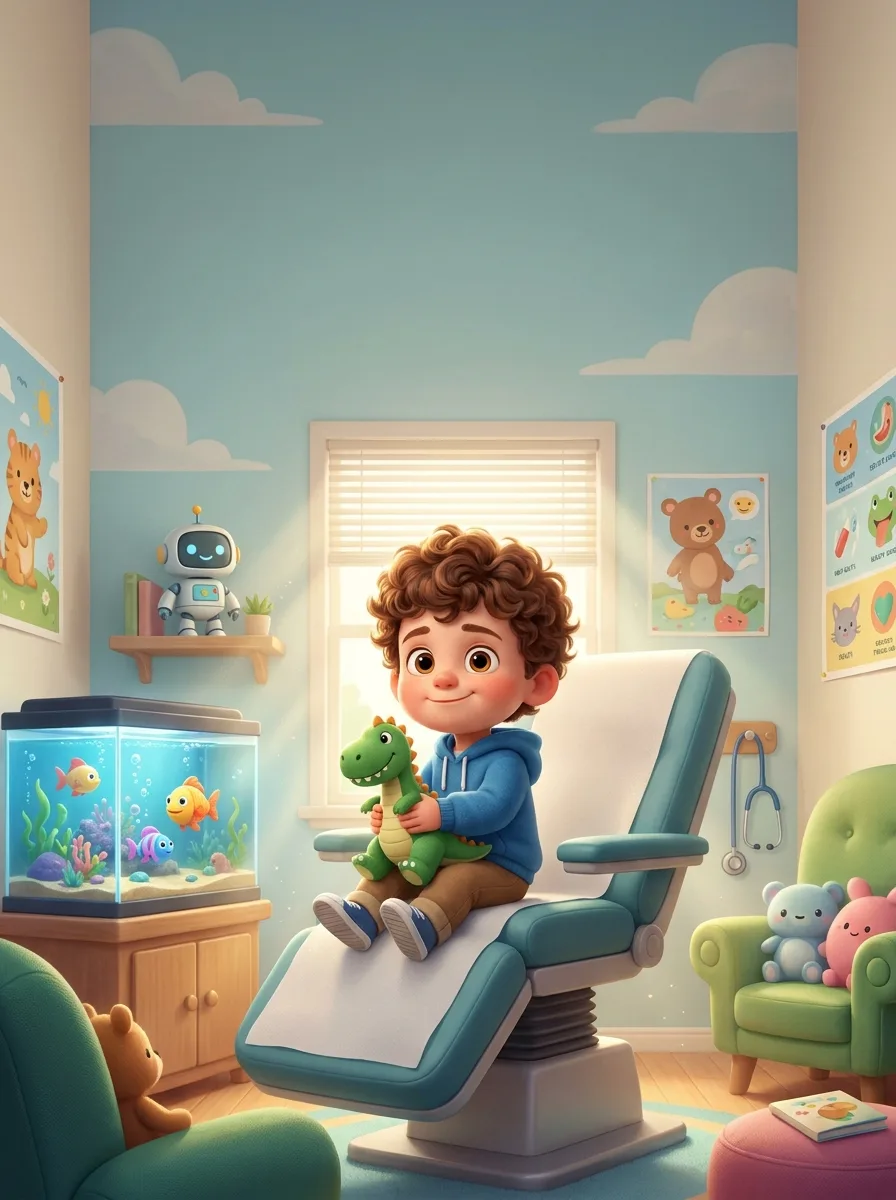
The waiting room has a fish tank and the chair goes up and down.
Ages 0-8
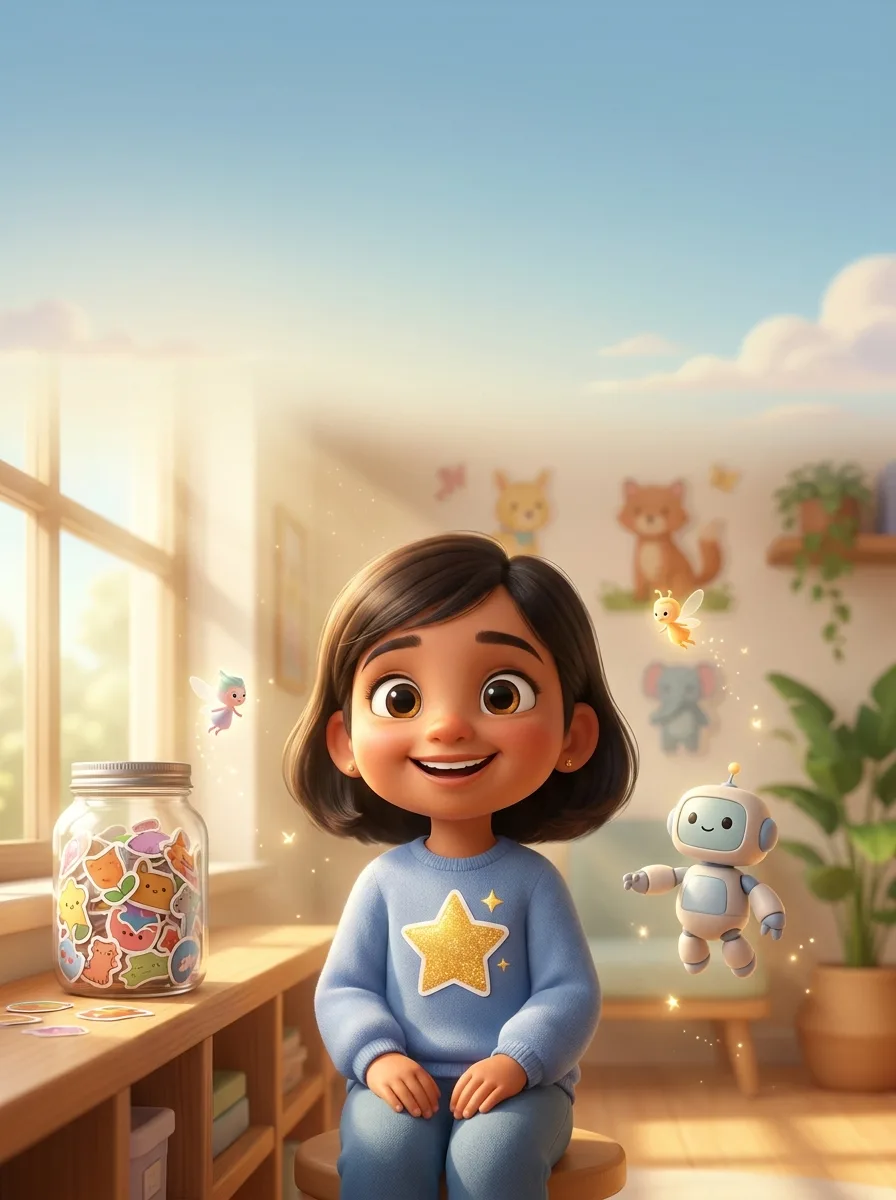
There is a jar of stickers at the end, and you only get one if you sit still.
Ages 0-8
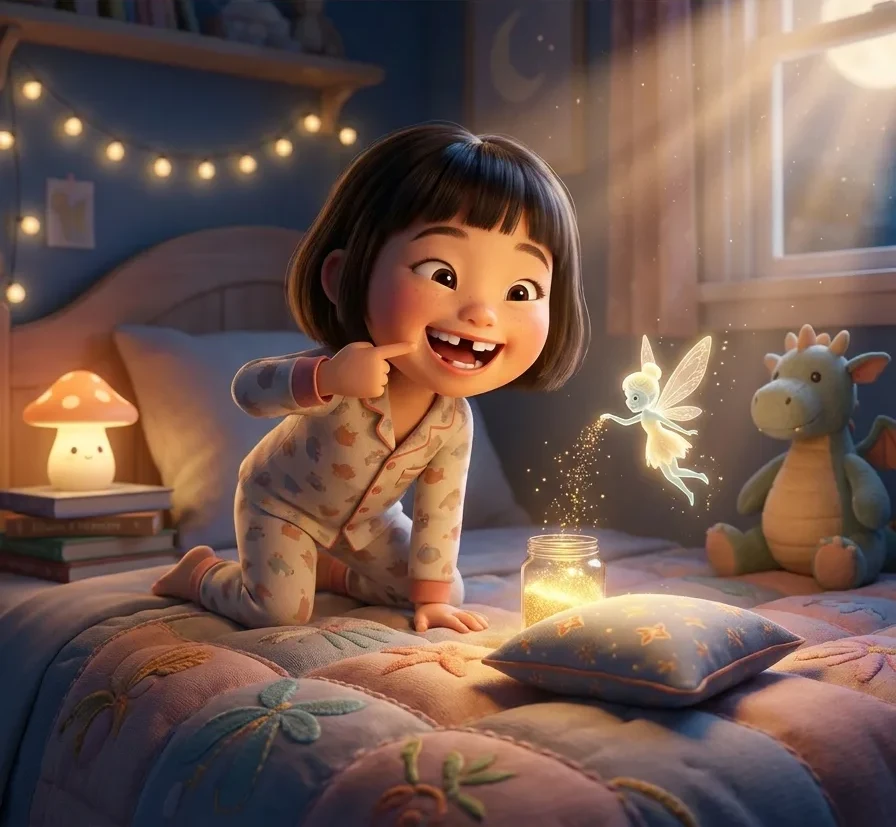
Your child's very first tooth is wobbling, and a tiny visitor is on the way tonight.
Ages 4-8
Both the NHS and the American Academy of Pediatric Dentistry say the same thing: when the first tooth comes through, or by the first birthday, whichever is sooner. That is much earlier than most parents expect, and it is on purpose - the early visits exist so the room stops being strange long before anything needs doing in it.
Usually far less than a parent is braced for: a chair that leans back, a bright light, a small mirror, and a count of the teeth. It varies by practice and by country, so the one useful thing you can do is ring them and ask what their first visit involves - then tell your child that, in those words, rather than a general reassurance.
No, and a frightened child is the one this is for. What changes the day is not confidence, it is familiarity: a child who has already opened wide and counted to ten on the bathroom floor is doing a thing they have done before. Start the evening you book it if you can, and three nights is enough.
It does not have to be, and plenty of free picture books about the dentist work well. The reason we make it theirs is that a child rehearsing as themselves, in the practice they are actually going to, on the day it is actually happening, is doing something closer to a run-through than to a story.
Nothing at the moment. We are writing these by hand for the first families while we find out whether the whole loop - the story, the practice, the sentence for the parent - changes what happens in the chair. There is no card, no account, and we will ask you afterwards what actually happened.
No, and we will not make one. Dental bodies recommend early, positive, familiar visits, and we have quoted them below with links. Whether our particular loop helps is exactly what these first families are helping us find out, and if it turns out not to, we will say so here.
Both sources above were read on 22 September 2026; the NHS page was last reviewed by the NHS on 30 June 2025. Nothing here is dental advice and none of it replaces your own practice, who know your child’s mouth and we do not. We name these organisations to identify their published guidance and imply no affiliation with either. If a line on this page stops matching its source, tell us and we will correct it.
Last updated: