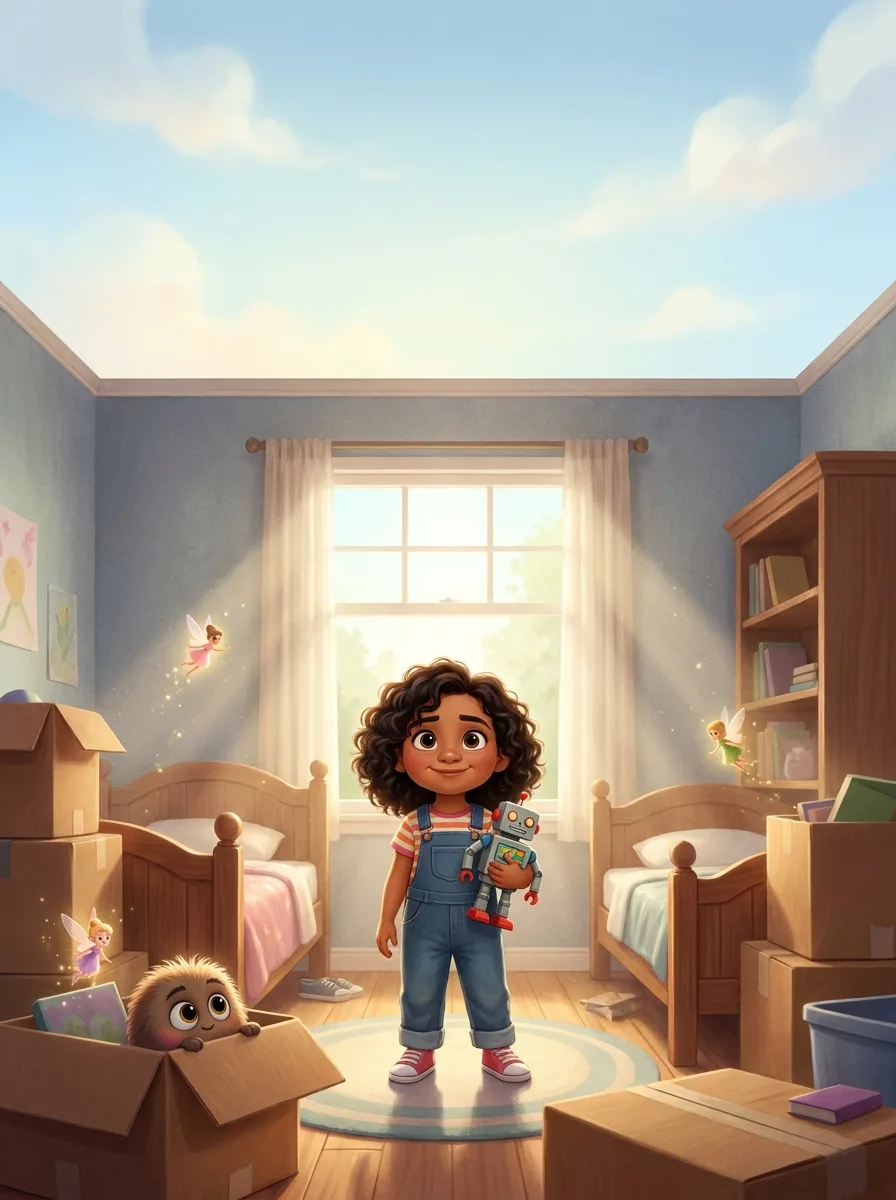
The house is louder, the days are different, and your child is suddenly the big one.
Ages 2-6
From $16.90
What the population data actually says about brothers and sisters - and the one finding that should change how guilty you feel.
Every parent in this position has had the same 2am thought: what is this doing to my other child. The largest UK study to ask that question found something more useful than reassurance. Yes, siblings scored slightly worse on average - and once family circumstances were accounted for, having a disabled sibling stopped predicting anything at all in five of the six models they ran.
Hayden, Hastings, Totsika and Langley used the UK Millennium Cohort Study to compare 257 older siblings of children with an intellectual disability against 7,246 who had none. It is population-based, which is rare in this literature and the reason it is worth quoting.
The differences were real but small. Total behaviour problems 8.98 against 7.48 - an effect size of 0.19. Peer problems 0.26. Conduct 0.22. Siblings were between one and a half and two times as likely to reach a clinical threshold.
Then they controlled for everything else, and the finding turned over. Being male, socio-economic deprivation, a single-parent household, the primary carer's own psychological distress, and the disabled child's own behavioural difficulties all predicted how the sibling was doing. Sibling group membership itself did not - in five of six models.
Read plainly: it is largely not the disability that shapes how your other child does. It is the pressure the family is under, and how the adults in it are coping.
Primary carer psychological distress was one of the factors that stayed significant. That is not a moral instruction to practise self-care; it is a measured association, and it means the things that reduce the load on you are also interventions for your other child.
The practical version: accept the help that is offered, take the respite even when it feels indulgent, and treat your own GP appointment as being for both children.
This cuts the other way too. If you are already stretched thin, the answer is not to find more hours for the sibling out of hours you do not have.
Tell them the truth, at their level, before they invent a worse version. Children fill silence with self-blame far more readily than adults expect. "His brain works differently, and that is why some things are harder for him" is enough at five.
Give them something that is only theirs. Not more time in general - one small, reliable, unshared thing. Fifteen minutes is more useful than a promised day out that keeps getting cancelled.
Let them be fed up. A sibling who is allowed to say "I hate that he ruins everything" without it becoming a crisis is a sibling who will still be talking to you at fifteen.
Do not make them the extra adult. Being trusted is good; being responsible is not. Watch for the child who has quietly stopped needing anything.
The stories written for the child who is already there rather than the one arriving are gathered together, which is the harder half to shop for. Take a look
The study measured intellectual disability rather than autism specifically, and only older siblings. The autism-specific literature is more mixed - some of it finds elevated difficulties, some finds having a disabled sibling associated with better psychosocial development where family risk factors are low.
It is also cross-sectional, so it shows associations rather than causes, and every measure came from the primary carer. Treat the direction of it as sound and the precision of it as provisional.
The house is louder, the days are different, and your child is suddenly the big one.
Ages 2-6
A second small bed arrives in your child's room, and at first there is no space for it anywhere.
Ages 2-8
A rope swing, a dare, and a summer that neither of them will forget.
Ages 4-8
Yesterday your child was the small one.
Ages 0-8
The population data does not support that framing. Average differences were small, and once family circumstances were accounted for, having a disabled sibling stopped predicting adjustment in five of six models. What predicted it was deprivation, single parenthood, the carer's own distress, and the disabled child's behavioural difficulties.
More than feels comfortable, earlier than feels necessary, at the level they can hold. Children who are told nothing do not conclude nothing - they usually conclude it is somehow their fault.
Not necessarily. The sibling who has quietly stopped asking for things is often the one to check on. Being easy is sometimes a strategy rather than a temperament.
On this evidence, reducing your own load. Carer distress was one of the factors that remained associated with sibling adjustment after everything else was controlled for, which makes accepting help a direct intervention rather than a luxury.
The study described here is Hayden, Hastings, Totsika and Langley (2019), Journal of Abnormal Child Psychology - 257 older siblings of children with an intellectual disability, compared with 7,246 others, in the UK Millennium Cohort. It is cross-sectional, so it shows associations rather than causes. Last checked on 11 August 2026. General information, not advice about your child.
Last updated:
If the other child could do with something that is unmistakably theirs, a book with only them in it is one way to do it.
Browse the collection