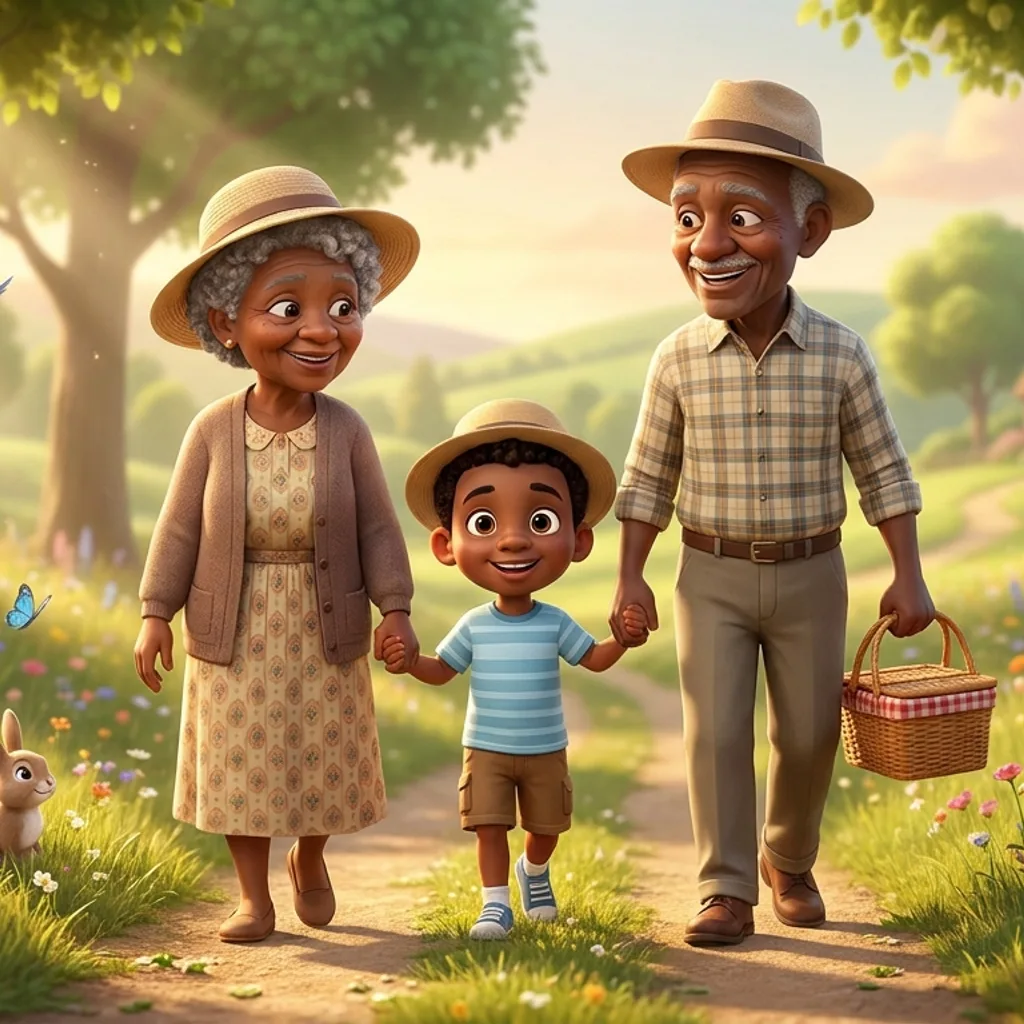

Your child lives one way, and someone who loves them lives a long way the other.
Ages 2-8
From $16.90
What happens at airport security with a small child, what helps their ears on the way down, and how to tell them the day in order, with a free social story to print.
Most of what makes a first flight hard for a small child is not the flying. It is the airport: queues, a machine that takes your bag away, strangers giving instructions, and a long wait in a room with a window. A child who knows the order of the day in advance has far less to be surprised by, so this page goes through it in that order, and every practical claim on it links to the organisation that made it.
"We are going to see Grandma" tells a child where. It does not tell them about the queue, the bag going into a tunnel, or the long sit with a belt on. The Lurie Children's Hospital of Chicago suggests a social story for exactly this: a visual way to walk a child through what to expect, read before the day.
Say it in order: the car, the airport, the bag drop, security, the waiting room, the plane, the belt, take-off, the flight, landing, and the people at the other end. Say what they can do at each step rather than what they must not do, which is also Lurie's advice: rules that say what TO do are easier to follow.
Then read it again on the morning, and take it with you. A story they already know is something to point at in the queue.
A free printable social story walks a small child through the day in that order, with spaces for a photo of your airport and your plane and picture cards to cut out. Take a look
In the United States, the TSA's own guidance says children 12 and under can keep their shoes, light jackets and headwear on during screening, and that children will not be separated from their parent or guardian. Strollers, car seats, baby carriers and backpacks go through the X-ray machine, so a child who is attached to a car seat will see it disappear for a moment and come back.
Tell the officer whether your child can walk through the metal detector on their own; small children can be carried through. Formula, breast milk and toddler drinks in quantities over the usual 3.4-ounce (100 ml) limit are allowed in carry-on bags, and the TSA asks you to tell the officer about them at the start of screening.
If your child is autistic or finds screening hard, TSA Cares is a free helpline for advice on the process; Lurie lists it as 855-787-2227. These are the US rules. Airports in other countries set their own, so check yours before the day rather than at the belt.
KidsHealth, the parent site of the Nemours children's health system, explains that ear pain on a plane comes from the pressure in the middle ear not matching the cabin, and that it is most common during landing, which is why so many babies cry in the last few minutes of a flight. It is usually temporary.
Their advice is swallowing. For a baby, a bottle, a dummy or a feed during take-off and landing, with a bottle-fed baby kept upright. For older children, plenty of water or other non-caffeinated drinks through the flight, and staying awake for take-off and landing, because children swallow less while they sleep. Chewing gum or a hard sweet is for children over three only.
So tell your child about it in advance, in their words: "Our ears might feel funny when the plane goes down. We will have a drink and swallow." A funny feeling that was predicted is a lot less alarming than one that arrives out of nowhere.
Lurie's first piece of advice comes before the tickets: compare flight times with your family's daily routine and pick the least disruptive one, look at the length of each flight and any stops, and decide whether your child would rather look out of the window or sit on the aisle.
Some airports and airlines also run rehearsals for families of children with autism or other disabilities. Lurie names The Arc's Wings for Autism programme, which lets a family go through the airport and the boarding process before the real day. If one runs near you, it is the closest thing to a practice flight there is.
If the flight is to see a grandparent who lives a long way away, The Same Moon is a picture book about exactly that distance, and the day it finally closes. Take a look
Bring what comforts them at home. Lurie suggests comfort items for children with sensory sensitivities, and noise-cancelling headphones for the noise and commotion of an airport and a cabin.
Watch for the early signs that they are running out of steam, and take a break before the meltdown rather than after it: a walk to the toilet, a different snack, a new thing from the bag. Many planes show a flight map on the screen, which Lurie points out can help: a child who can watch the little plane move has a way to see how much is left.
Your child lives one way, and someone who loves them lives a long way the other.
Ages 2-8
The new bedroom is the wrong shape and the window looks at the wrong things.
Ages 0-8
One day, two grandparents, and absolutely no plan.
Ages 2-8
Your child blasts off on a journey across the stars.
Ages 4-8
Tell them the day in order, not just the destination: car, airport, bag drop, security, waiting, plane, belt, take-off, landing, and who is at the other end. A social story read on the nights before, and again on the morning, gives them something familiar to hold on to in the queue.
Not in the United States: the TSA says children 12 and under can keep their shoes, light jackets and headwear on, and will not be separated from their parent. Other countries set their own rules, so check with your airport.
Help them swallow, especially on the way down, which KidsHealth says is when ear pain is most common. A bottle, a dummy or a feed for a baby; a drink of water for an older child, and keeping them awake for take-off and landing. Gum and hard sweets are for children over three. If pain lasts, see a doctor.
In the US, yes: formula, breast milk and toddler drinks over the usual 3.4-ounce limit are allowed in carry-on bags. The TSA asks you to tell the officer at the start of screening. Rules elsewhere differ.
In the US, TSA Cares gives free advice on getting through screening, and some airports run rehearsal days, such as The Arc's Wings for Autism. Lurie Children's Hospital lists both. Outside the US, ask your airport and airline directly.
This guide was last checked on 29 October 2026. The security rules come from a TSA press release of 7 March 2023 and apply to US airports only. The ear advice comes from a KidsHealth page reviewed in September 2023, and the planning advice from a Lurie Children's Hospital blog post dated 13 July 2026, all read on their own sites on 29 October 2026. Nothing here is medical advice: if your child has an ear infection or ear pain that lasts, ask a doctor before flying.
Last updated:
The order of the day, said in advance, does more than any toy in the bag.
Browse the collection