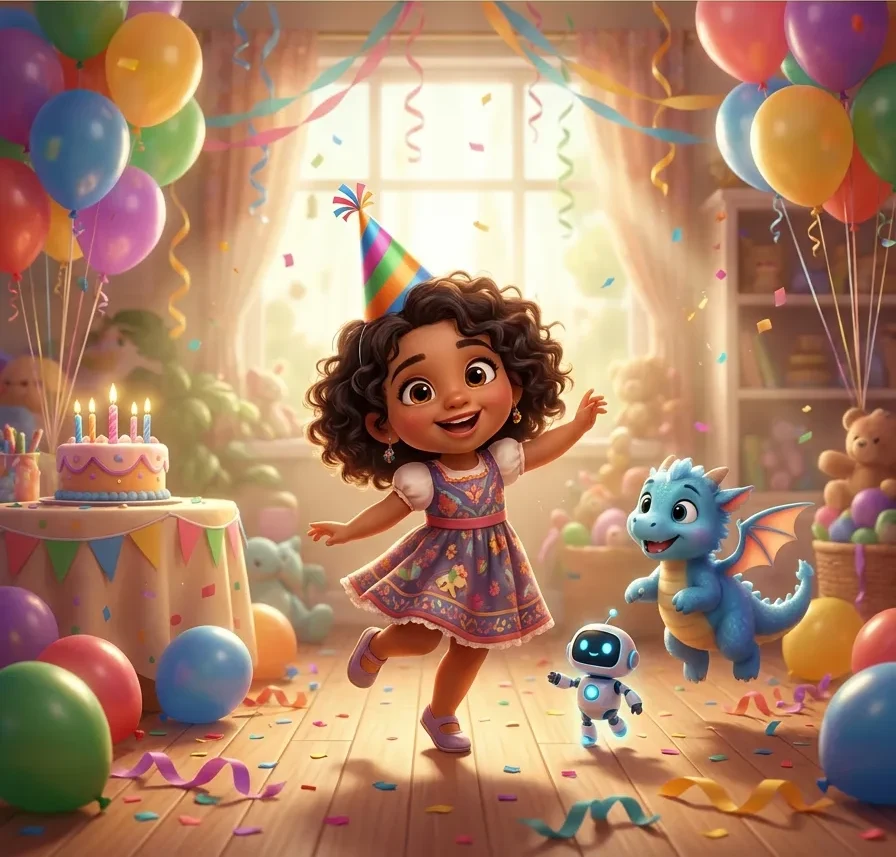
A joyful celebration story where your child turns another year older, surrounded by wishes, laughter, and a sprinkle of birthday magic..
Ages 0-8
From $14.90
Why a personalised book for somebody else's child needs a photograph and an age you do not have yet, and why asking their parent for both is the right move rather than a spoiled surprise.
Every gift list treats this as a browsing problem - pick a nice thing, wrap it, turn up. A personalised book is not that, and the difference is worth knowing before you start rather than at the upload screen. It needs one clear photograph of a child who is not yours, and it needs their age to be right rather than roughly right. Both of those come from a single message to their parent, which means the adult's surprise is gone and the child's is not. That is the trade, and it is a good one.
A book with a child drawn into it is made from a photograph, so the gift starts with a file you do not have. And because the text is written to a reading level you choose at setup, it also starts with an age. For your own child both are free. For a friend’s child, both are a question.
This is the whole reason the present either lands or does not. Everything else - which story, which cover, hardback or not - is a preference. The photograph and the age are requirements, and they are the two that a gift guide written for toys has no reason to mention.
Send one message: what are they into at the moment, how old are they exactly, and can you send me a clear photo of their face. Say what it is for. You have now spoiled the surprise for one adult, who will be pleased, and for nobody else - the child has no idea, and the child is the one opening it.
Ask for a forward-facing photograph in ordinary light, taken recently. The best photo of a child is rarely the most flattering one: a straight-on snap at the kitchen table beats a beautiful profile shot at sunset, every time. If the parent sends six, use the boring one.
A photograph of a child who is not yours is not yours to hand to a website, and the polite version of this is also the correct one: the person who can say yes is their parent, and you are already messaging them. Getting the photo from the parent and getting permission are, conveniently, the same message.
What happens to it afterwards is a fair question to be asked back, and it should have a short answer you can repeat. Ours is on our photo-privacy page, written to be read by the parent rather than by a lawyer.
A toy for a four-year-old is fine for a five-year-old. A book is not, because the text is tuned - sentence length, vocabulary, how much happens per page. "About four, I think" is how you end up with a book that is read once politely and shelved, and that failure is invisible until it has already happened.
It cuts the other way too. Get the age right and the book is pitched at exactly the child holding it, which is the part a relative who has known them for years often gets wrong and a friend who simply asked gets right.
If you cannot get a photograph - the parent is private about pictures of their child, or you do not know them well enough to ask - then this is not the gift, and no amount of wanting it to be will change that. Nothing here works without the face.
The same applies if the party is tomorrow. A printed book includes production time, and the clock starts when the book is approved rather than when it is paid for. The digital version arrives immediately and is a real answer to a late invitation; a rushed hardback is not.
A joyful celebration story where your child turns another year older, surrounded by wishes, laughter, and a sprinkle of birthday magic..
Ages 0-8
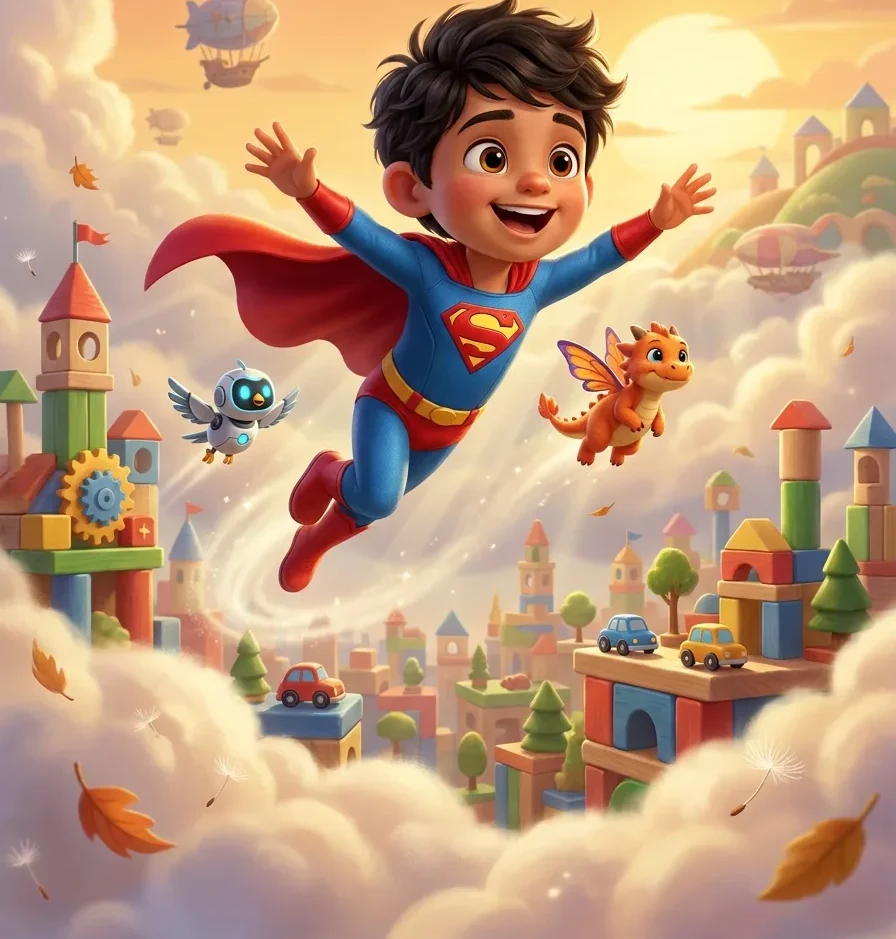
Your child discovers an extraordinary power - and an even bigger heart.
Ages 4-8
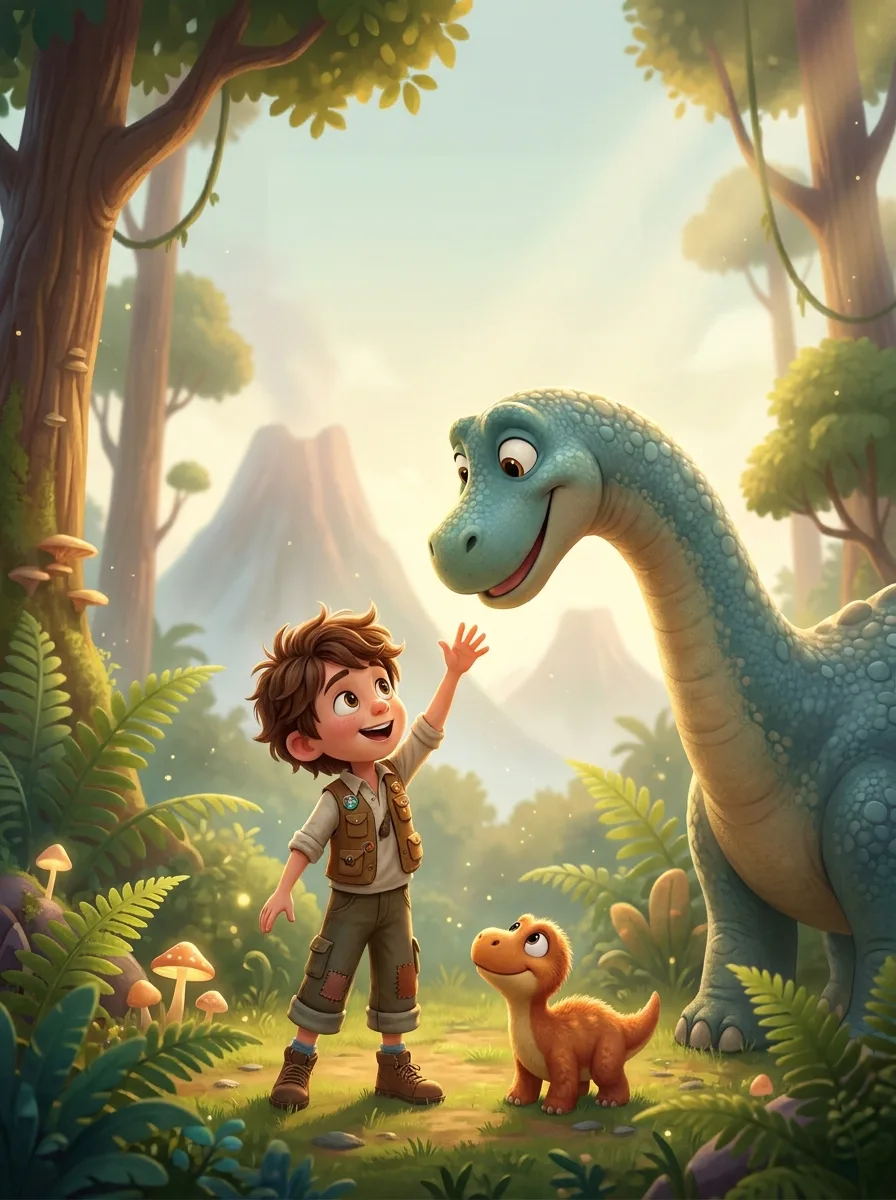
Your child travels back to the age of gentle giants.
Ages 4-8
Your child blasts off on a journey across the stars.
Ages 4-8
Yes, and you should get the photograph from them anyway, so it is one conversation rather than two. A picture of somebody else’s child is theirs to share, not yours, and the parent is also the only person who can tell you the age you need.
Not well. Without a clear, recent photograph the likeness is a guess, and without the real age the reading level is a guess too. The surprise you would be protecting belongs to the parent; the child is surprised either way.
Ask. It is the single highest-value question in the whole process, because the text is written to the level you choose and a year out is a book pitched at the wrong child. If you genuinely cannot ask, choose the younger option - a book slightly below a child is read, a book above them is abandoned.
It matters more than the story you pick. A face that is clear, forward-facing and lit by ordinary daylight is what makes the child recognisable on every page. You can see the result free before you pay, so a weak photo is a thing to fix rather than a thing to find out about later.
It reads as attention rather than expense, which is why it works at a party where everything else is plastic. If you know their age and have one photo, you know enough. If you have neither and cannot ask, that is the real signal to give something else.
Last updated:
Send the message first, then pick the story. The photograph and the age are the whole job; everything after that is the fun part.
Books for a friend's child