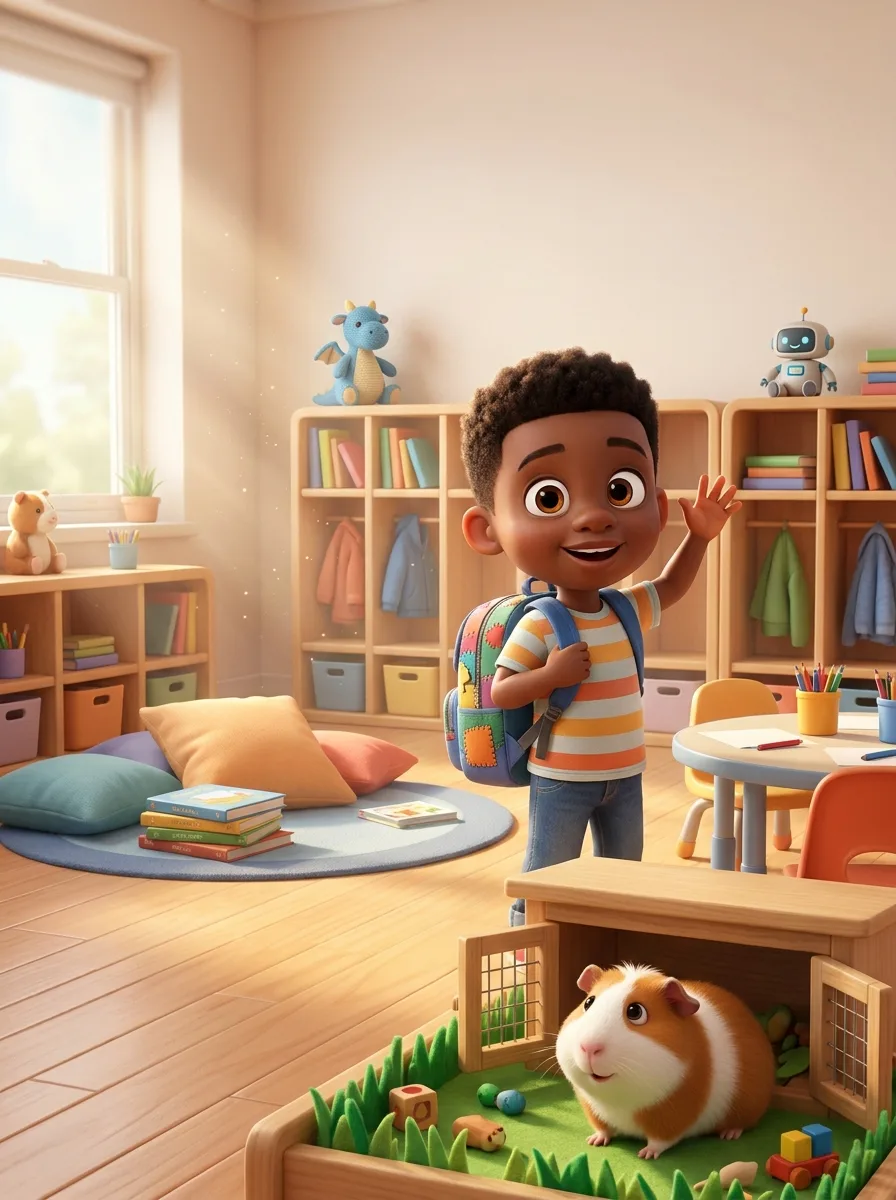
A reassuring story for the big first day, where your child learns that a brand-new place can quickly start to feel just like home..
Ages 2-8
From $14.90
Twenty-six lines for a first day - from parents, grandparents and godparents, including the ones for a child who is dreading it.
The book is going to a child who cannot read it yet, which is the thing that makes this hard to write and also the thing that makes it easy once you accept it. You are not writing to the four-year-old at the gate. You are writing to the eight-year-old who finds it on a shelf and reads it themselves, and works out that somebody was paying close attention on a day they cannot remember.
The instinct is to write something rousing - be brave, you will be brilliant, we know you can do it. Read that back as a child who is frightened. Every one of those sentences quietly says that today is enormous and that there is a way to get it wrong, which is the opposite of what you meant and exactly what an anxious four-year-old will hear.
Write the ordinary instead. Where you will be at three o'clock. What is for tea. That they are coming home. A first-day inscription that assumes the day is survivable is more reassuring than any amount of encouragement, because it treats school as a place people simply go rather than as a test.
And put the date in, with the school's name. This is one of about four days in a childhood that everyone agrees to photograph and nobody writes down, and in fifteen years the name of the school in your handwriting is worth more than the sentiment around it.
If you have not chosen what to give yet, the guide to starting-school gifts covers what a four-year-old actually keeps against what looks thoughtful on the day. Take a look
Take one and change the name. The best ones name the day rather than the feeling.
"For {name}, on your first day of school. We were so proud that we had to leave quickly."
"To {name} - you got out of the car and you went in. That was the hardest part and you did it first."
"For {name}, starting school. Whatever happens today, you come home to us."
"To {name}: you have been waiting for this since you were three. So have we."
"For {name} - one small uniform, one enormous day."
"To {name}, who started school on {date} and asked for spaghetti afterwards."
"For {name}. We will be at the gate at three. We have always been at the gate."
The advantage a grandparent has here is perspective the child cannot get anywhere else - they watched the child's own parent do this exact thing.
"For {name}, on your first day. Your mother cried at hers. Ask her about it."
"To {name} - from Granny, who went to school in a building with no heating and turned out perfectly well."
"For {name}, starting school: this family has been doing this for four generations and none of us has been eaten."
"To {name}, from Grandad. Learn everything, then come and explain it to me."
"For {name} - I will want to hear about every single day, and I mean it."
A grandparent writing this one has more to say than a first day - the lines for a grandchild, including the things only a grandparent can write, are here. Take a look
You are the second ring, and the second ring has a real job on this day: you are proof that the child is being thought about by people who are not in the house.
"For {name} on your first day at school, from someone who is extremely interested in how it goes."
"To {name} - your auntie is on standby for the days that turn out rubbish."
"For {name}, starting school. You already know more than you think you do."
"To {name}: new shoes, new bag, same you."
"For {name} - I have known you since before you could walk and now you are off to school. Steady on."
Some children go in without looking back and some do not, and the second group is who this section is for. The rule is the same as above and matters more: do not promise them that they will love it. If they then do not, you have told them something untrue about themselves on the first page of a book they keep.
"For {name}. You do not have to like it on the first day. Almost nobody does."
"To {name} - you are allowed to find it hard. It gets easier, and quite quickly."
"For {name}: if today is horrible, tomorrow is a different day. They mostly are."
"To {name}, who is braver on the inside than they feel. Both of those are true at once."
"For {name} - you do not have to make a friend today. There is plenty of time."
The second child gets less ceremony than the first, universally and unfairly, and an inscription is a cheap way to correct it.
"For {name}, from your big sister, who has already done this and says it is fine."
"To {name} - you are going to my school now. Do not use my peg."
"For {name}, who has been waiting two years to go where his brother goes."
"To {name}: second in the family, first in the queue."
The first year of school has a different name in nearly every country this book might be posted to - Reception in England and Wales, Primary 1 in Scotland and Northern Ireland, Junior Infants in Ireland, kindergarten in the United States and Canada, Prep or Kindergarten depending on the Australian state, Year 1 in New Zealand.
Write the one the child will actually say, not the official one. A dedication that calls it Reception when the whole family said "big school" for a year reads, later, like it was written by the education department.
A fair number of people arrive at this question meaning something else entirely: the home-school reading diary that comes back in the book bag every night wanting a comment. That is a different object with a different job, and teachers are consistent about what they want in it - the book, the pages read, and one honest line about how it went. "Read pages 4-9, needed help with sounding out, enjoyed it" is a complete entry.
You are not being marked on it, and it is not the place for the thing you want to say to your child. Save that for the flyleaf of a book they get to keep, which is what the rest of this page is about.
The first blank page, in pen. Not the inside cover, which is where the school's own label usually ends up.
And if the book is going into a book bag rather than staying at home, put the child's name where the school asks for names - usually the inside front cover or a sticker - as well as writing the dedication. The two do different jobs: one gets the book home from the cloakroom, the other is the reason it is worth getting home.
For a birthday, a christening, a new baby or a grandchild rather than a first day, the lines for those occasions are gathered here. Take a look
A reassuring story for the big first day, where your child learns that a brand-new place can quickly start to feel just like home..
Ages 2-8
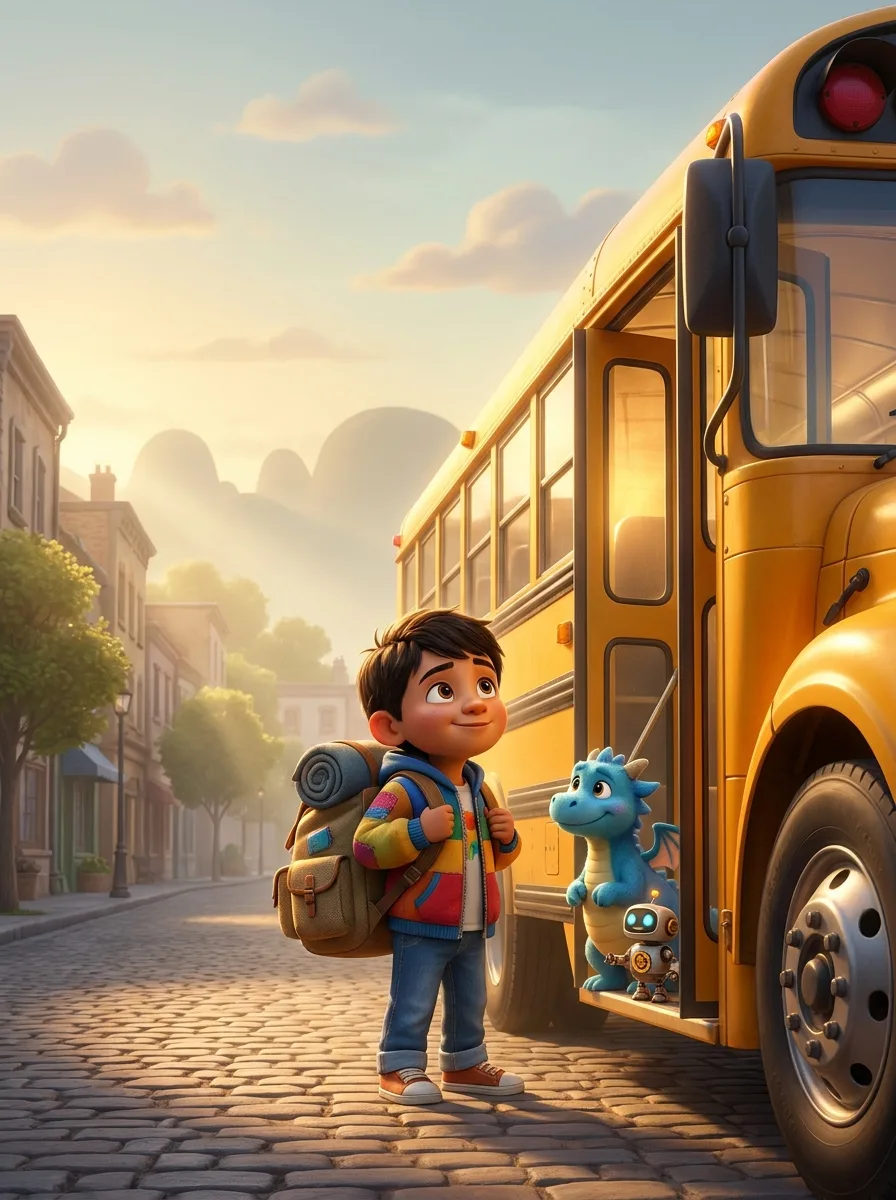
The bus is enormous, and yellow, and it stops right at the end of the road.
Ages 2-8
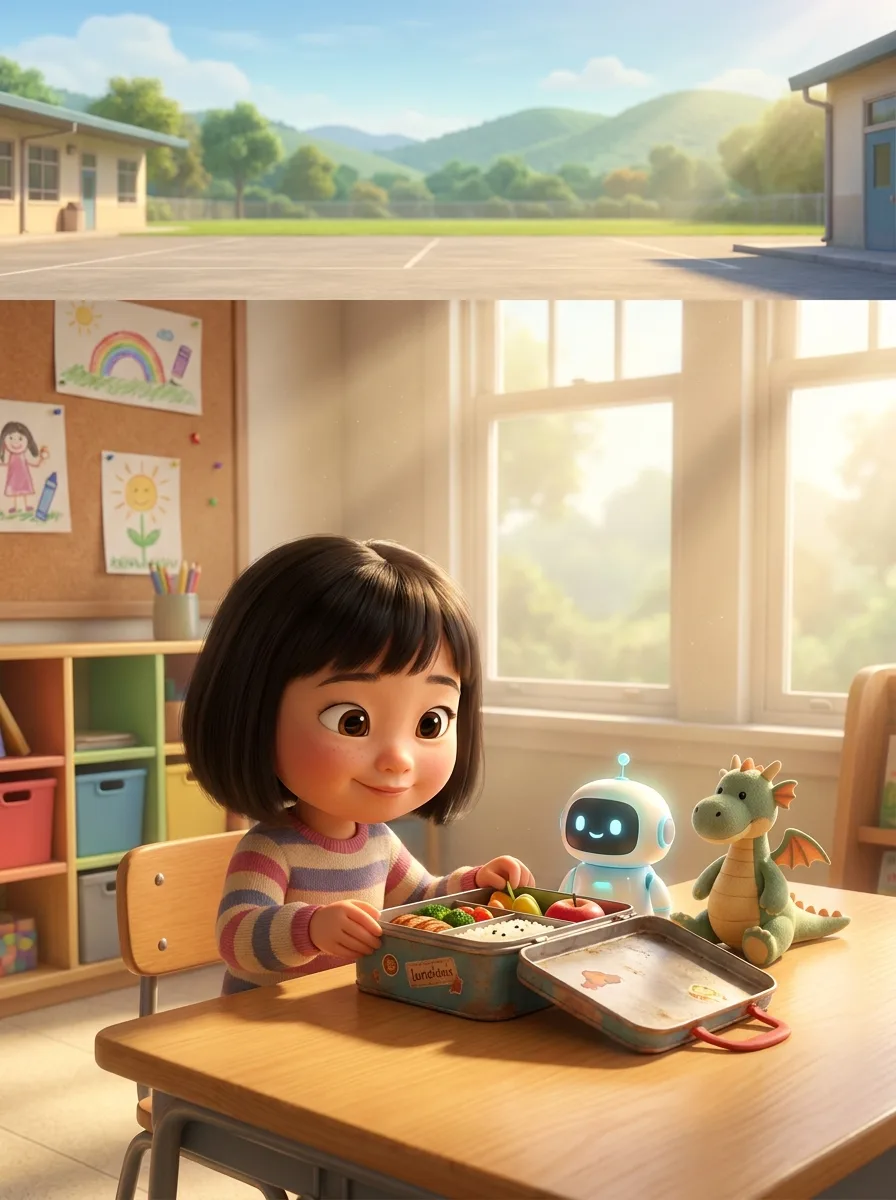
Everything about the first day is new except the lunchbox, which is from home.
Ages 2-8
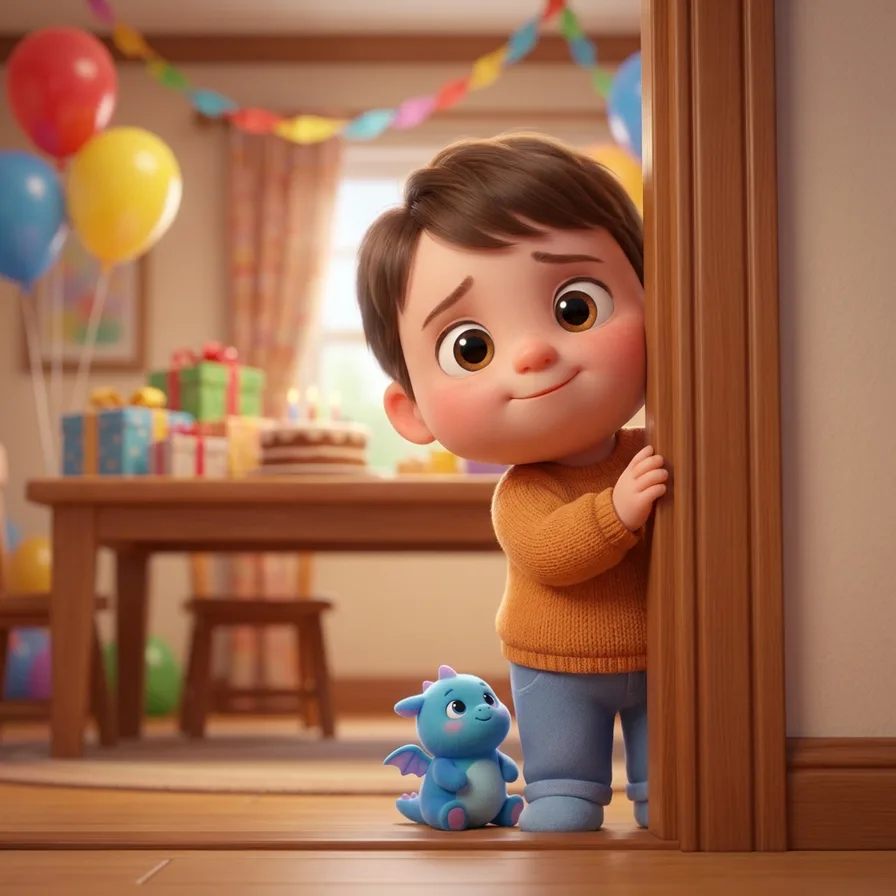
The party is loud and your child is not.
Ages 4-8
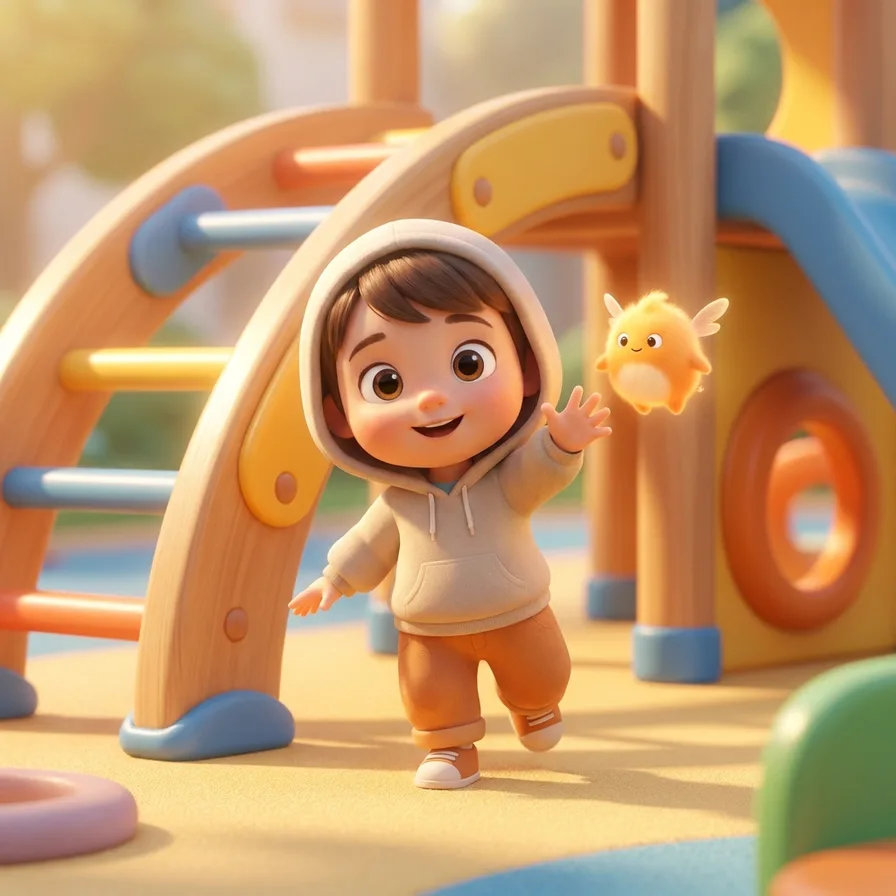
A new playground, nobody your child knows, and one small decision: be the one who says hello first.
Ages 4-8
Write the ordinary rather than the rousing: where you will be at three o'clock, what is for tea, that they are coming home. "Be brave" and "you will be brilliant" both tell an anxious child that today is enormous and that there is a way to get it wrong. Add the date and the name of the school.
Do not promise them they will love it. If they then do not, you have told them something untrue about themselves on the first page of a book they keep. "You do not have to like it on the first day. Almost nobody does" is both kinder and more accurate.
The thing only they can: what the child's own parent was like on the same day. "Your mother cried at hers. Ask her about it" does more for a nervous four-year-old than any amount of encouragement, because it makes the fear ordinary and hereditary.
Whatever the child says. The first year of school has a different name in nearly every country - Reception, Primary 1, Junior Infants, kindergarten, Prep, Year 1 - and a dedication that uses the official one when the family said "big school" all year reads like it was written by the education department.
No. The reading diary that comes home in the book bag wants the book, the pages read and one honest line about how it went - "read pages 4-9, needed help sounding out, enjoyed it" is a complete entry. It is not the place for the thing you want to say to your child.
The first blank page, in pen - not the inside cover, where the school label ends up. If the book travels in a book bag, put the child's name where the school asks for names as well; that is what gets it home from the cloakroom.
Last updated:
Name, date, school, and where you will be at three o'clock. That is a better first page than anything encouraging, and it is the one they can check against their own memory later.
Browse the collection