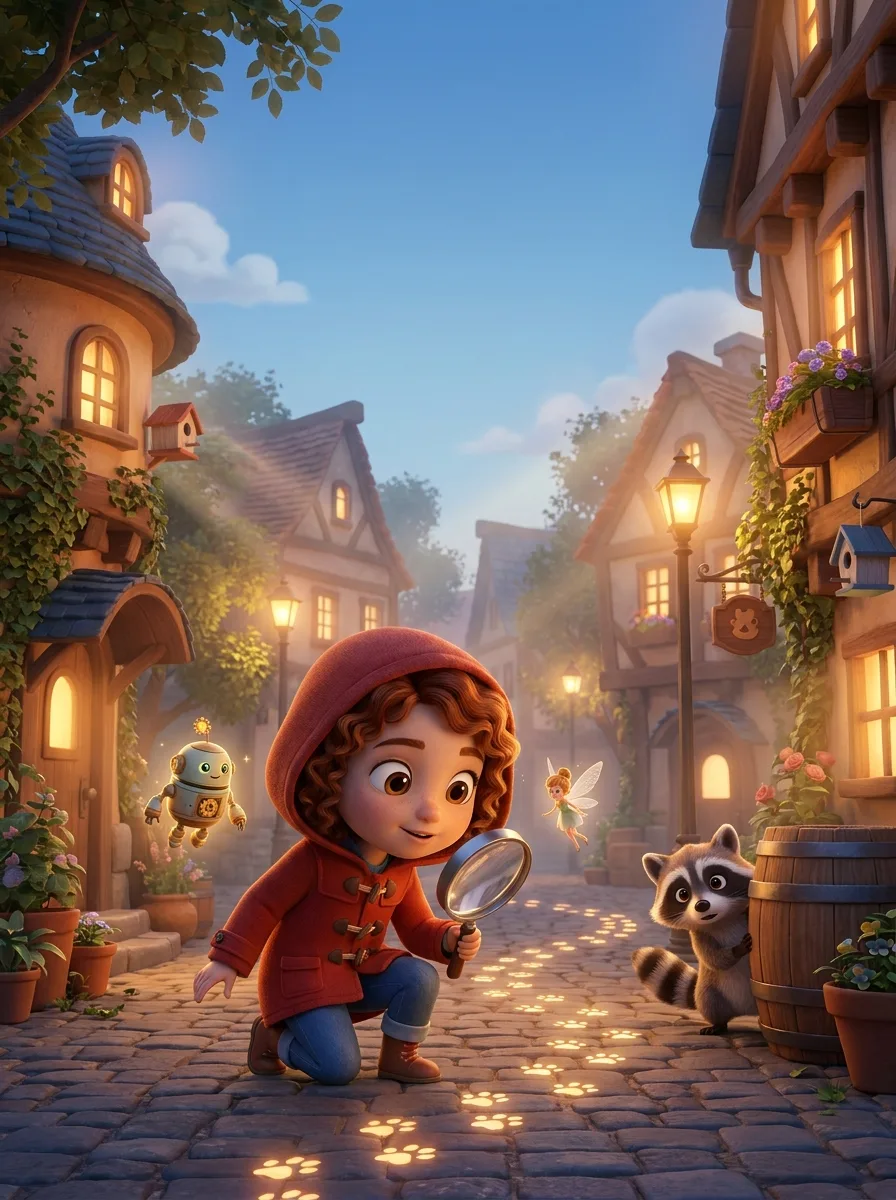
Your child follows the clues to crack the town's trickiest mystery.
Ages 4-8
From $14.90
Interest beats length, the reading-age gap nobody explains, and why audiobooks are not cheating - with the evidence for each.
When a child with ADHD will not finish a book, the instinct is to find a shorter book. It is the wrong lever, and pulling it repeatedly is how a child learns that books are the thing they are bad at. What actually decides whether a book gets finished is how badly they want to know what happens next - which is the good news, because it is the one variable you can do something about tonight.
ADHD is not a shortage of attention. It is attention that is hard to point on purpose - which is why the same child who cannot survive four pages about a generic rabbit will go through forty about sharks, volcanoes, Roman siege engines or whatever it currently is. The attention was never missing. It was somewhere else.
So the useful question is not "what is short enough". It is "what is this child obsessed with this month" - and the answer will be different by the spring, which is fine and not a sign of anything. Follow it rather than correcting it.
In practice: a book about the current obsession that is slightly too hard will beat a book at exactly the right reading level about something they do not care about. Difficulty is a cost the child will pay for a subject they have chosen. It is not a cost they will pay for a book that was chosen for them.
Reading difficulty co-occurs with ADHD much more often than most parents are told. Estimates vary by study - commonly around 25 to 40 per cent for dyslexia specifically, and higher for reading difficulty defined more broadly. It is worth knowing about and worth ruling out; it is not a foregone conclusion, and most children with ADHD have only the one condition.
Where it does apply, it produces a specific and miserable trap: a child with a ten-year-old's interests and a seven-year-old's decoding. Books written for their age are too hard to enjoy, and books at their reading level are about topics that embarrass them. Most children in this gap conclude they hate reading, which is a reasonable conclusion from the evidence they have been given.
The category built for exactly this is called hi-lo: high interest, low reading age. In the UK the specialist is Barrington Stoke, now part of Collins, whose books use a specially designed font and tinted paper stock along with edited language and layout, and are pitched so that finishing one is a quick win rather than a slog. We do not publish them and we make nothing if you buy one. For a child in this gap they are more useful than anything we sell.
If it is the reading level rather than the subject that keeps going wrong, the catalogue can be filtered by the age the text is written for. Take a look
This is the thing parents most often apologise for, and the evidence is reassuring. A meta-analysis of 46 studies found that comprehension does not differ significantly when the same text is read or listened to, and brain-imaging work in seven- to twelve-year-olds finds the same regions active for a story heard as for a story read. Once decoding is fluent, reading and listening are close to the same mental job.
The honest caveat is that audio alone does not practise decoding, so it is not a substitute for learning to read if that is still in progress. The fix is cheap: reading WHILE listening - the book open in their hands, the audio playing - because then they are seeing the words at the moment they hear them.
A workable split is audiobooks for the story habit and the vocabulary, read-along for the decoding practice. A child who listens to twenty books a year and reads five has a reading life. A child who is made to decode every word until they give up has none.
The other thing that gets apologised for. Pictures carry part of the plot, which lowers the load on working memory - the exact resource that is scarcest here - and the panels give a child natural, frequent places to stop without losing the thread.
A child who has read six graphic novels has read six books. The alternative on offer is usually not a better book; it is no book.
Read the first chapter aloud, even to a competent reader. Starting is the expensive part for this brain, and a cold start in silence is where most attempts die. Once the story has a grip, handing over is easy.
Prefer short chapters that end resolved, so there is a clean place to stop. Let them abandon books without a discussion - an abandoned book costs nothing and a forced one costs the next three. Look for white space and illustrations, which act as anchors on the page rather than decoration. And let them re-read the same book as often as they like; re-reading is fluency practice that feels like nothing.
We make personalized storybooks, so treat this section as the interested party talking. They are not a treatment for ADHD, they do not claim to be, and nothing on this page should be read as saying a book changes how a child concentrates.
What they do is narrower. For a child who mostly hears about what is hard, being the named hero of the story - the one whose fast noticing brain is the reason the day is saved - is a different experience from being read to about somebody else. That is one book, on one shelf, and this guide is mostly about the other hundred.
The one shape we think earns more than a nice evening is a book pointed at a specific day in the diary, read three nights running with one small thing practised in between, and the plan for a first dentist appointment sets that out in full. Take a look
Your child follows the clues to crack the town's trickiest mystery.
Ages 4-8
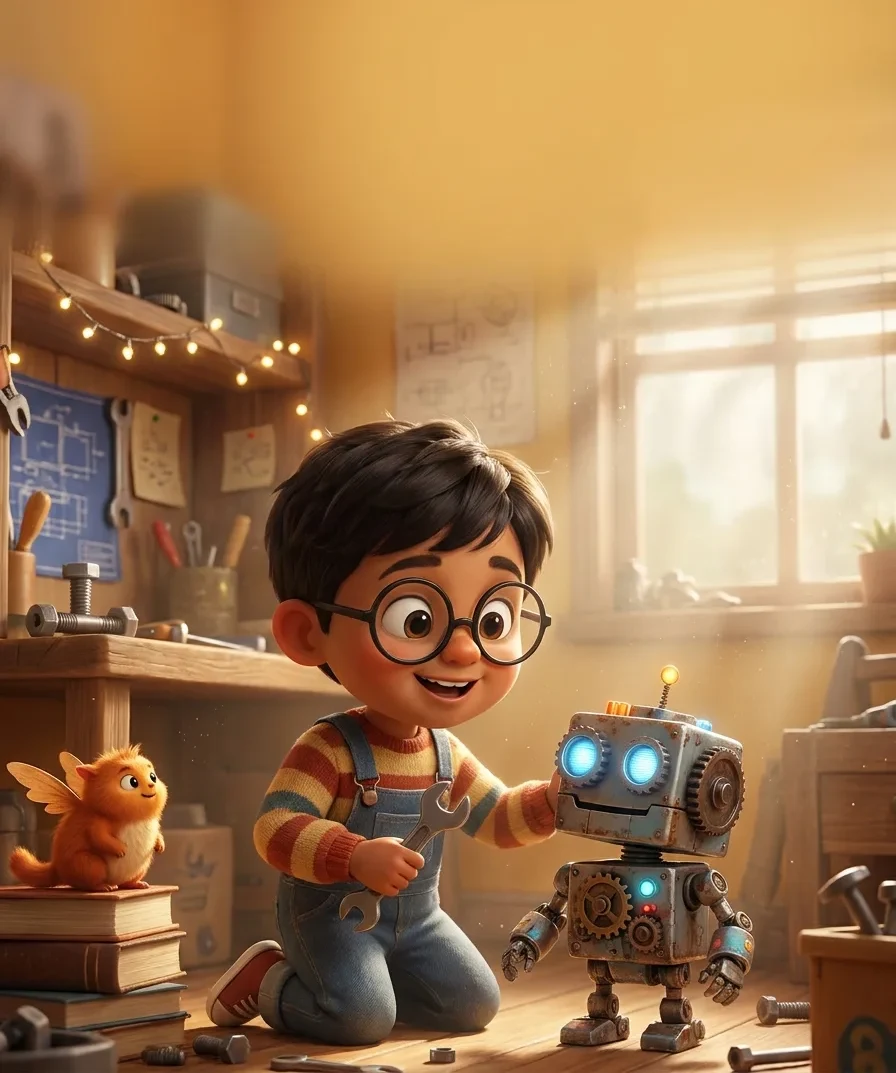
Your child builds a clunky little robot that beeps to life and becomes the best friend a kid could invent.
Ages 2-8
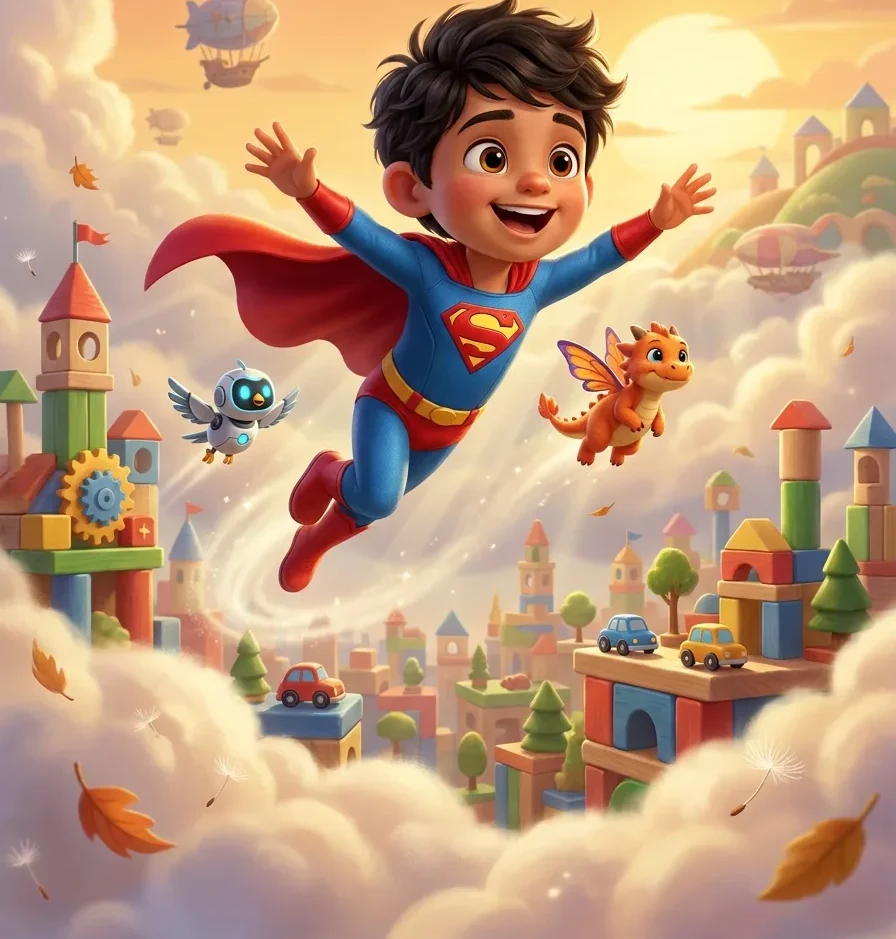
Your child discovers an extraordinary power - and an even bigger heart.
Ages 4-8
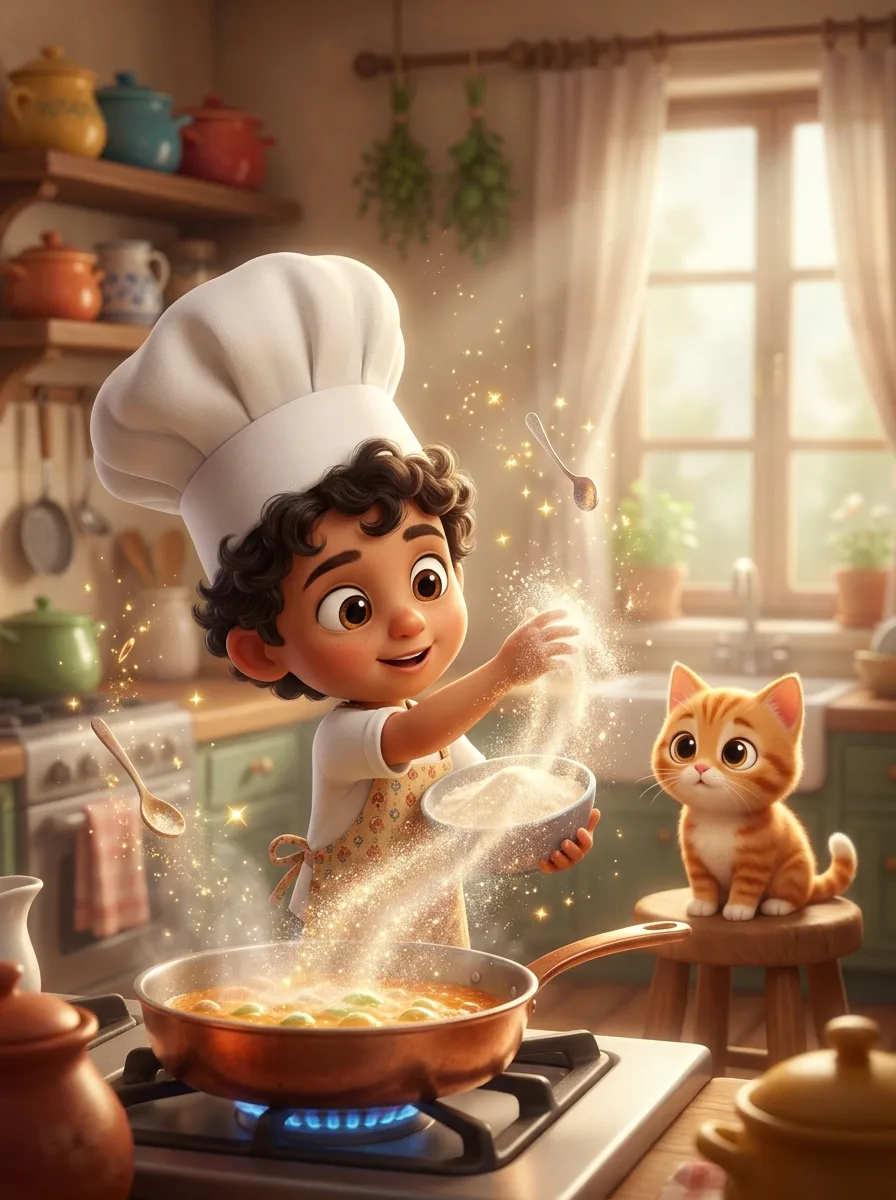
Tonight the kitchen belongs to your child! A deliciously fun story of flour clouds, bubbling pots, and the secret ingredient that makes everything taste like magic..
Ages 4-8
The ones about whatever they are currently obsessed with. There is no ADHD genre, and a book chosen for the subject a child has picked themselves will be finished far more often than one chosen for being short or "suitable". If their reading is also behind their age, look for hi-lo titles - high interest, low reading age - which are written for exactly that gap.
Usually not, or at least not first. Length is rarely what stopped them; interest is. A longer book about the thing they love gets finished more often than a short one about something they did not choose, and steadily shrinking the books teaches a child that reading is something they have to be protected from.
For comprehension, largely yes - a meta-analysis of 46 studies found no significant difference in understanding between reading a text and hearing it. What audio does not do is practise decoding, so if your child is still learning to read, have them follow along in the physical book while the audio plays. That way they see the words as they hear them.
No. The illustrations carry some of the plot, which frees up working memory, and the panel breaks give frequent natural stopping points. They are real books being really read, and the realistic alternative is usually not a denser book but no book.
No, and we would rather say so plainly. A storybook is not a therapy or an intervention, and anyone telling you a book will change how your child concentrates is selling you something. What a personalized book does is put your child at the centre of a story - a smaller and more ordinary thing, and worth having on its own terms.
Hi-lo books, which pair an age-appropriate story with a lower reading level so nothing about them feels babyish. In the UK, Barrington Stoke are the specialists - dyslexia- friendly font, tinted paper, edited layout. Your library will stock them and your child's school may already use them.
This guide was last checked on 12 August 2026. Co-occurrence figures for ADHD and reading difficulty vary between studies and are quoted here as a range; the audiobook finding is a meta-analysis of 46 studies of listening versus reading comprehension. We make storybooks and we are not clinicians - this is general information about choosing books, not advice about your child. For an assessment or for reading support, your GP and your child's school are the routes.
Last updated:
Most of what is on this page is about books we do not make. If you also want one where your child is the hero, that is the part we do.
Browse the collection