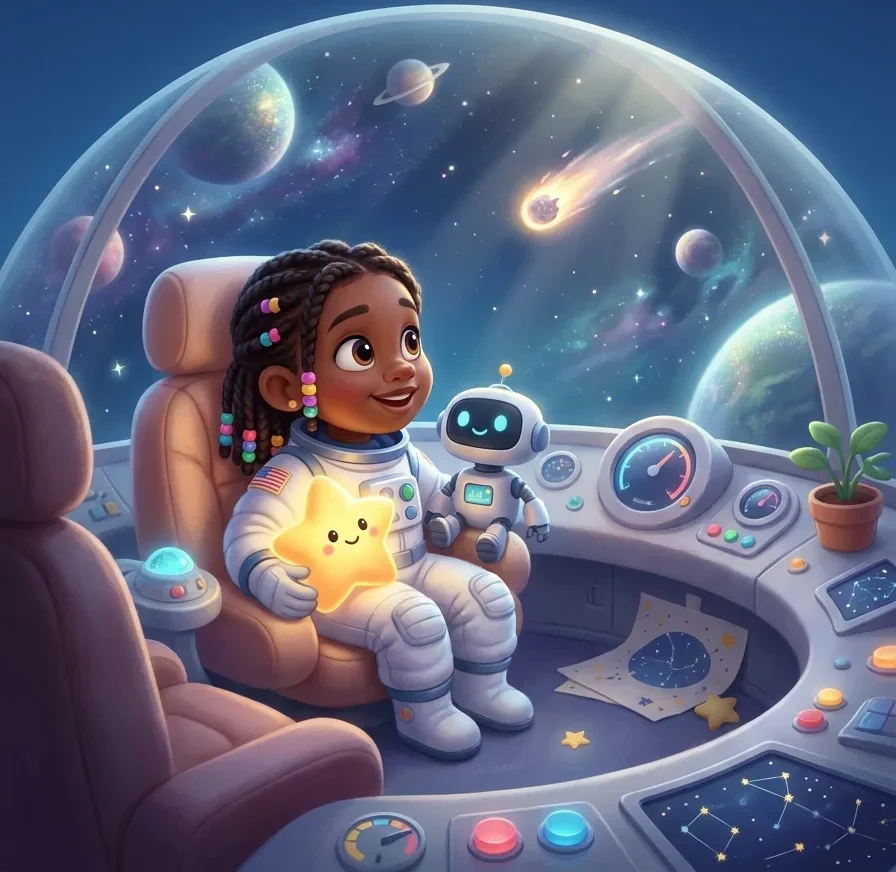
Your child blasts off on a journey across the stars.
Ages 4-8
From $14.90
We read the published privacy policy of ten photo-based personalized book services and pulled the same answers out of each: how long the photograph is kept, whether it is used to train an AI model, and what the document does not address at all. Every cell is a quotation with a link, and our own answer is in the same table.
Uploading a photograph of your child to a website is a small act with a long tail, and the honest answer to "is it safe?" is that it depends entirely on which site. The published answers range from "deleted promptly after generation" to "all data is deleted after 1 year" - and on the question we think matters most, almost none of them says anything at all.
Every cell is either a quotation from that service’s own privacy policy or the words "Not stated". Not stated means the document does not address the question. It is a statement about the document and nothing more: the company may well have a clear internal answer, and a parent reading the policy simply cannot find it.
All ten policies were fetched on 24 August 2026, and every phrase quoted here was checked against the raw page text rather than against a summary of it. Each policy is linked at the bottom of the page, and the date each document gives for itself is in the last column, so you can see how current the wording is. Company names are used only to identify whose policy is quoted; nothing here implies any affiliation or endorsement either way.
One disclosure, up front: we make one of the products in the table. Our row answers the same questions in the same terms. Judge the row against its link, not against the fact that we wrote the page.
Not "how long do you keep it". The one we would ask first is: while you do have it, can anybody else reach it? A photograph of a child sitting for two hours at a web address anybody can guess is more exposed than the same photograph sitting for two months where nothing can reach it but the server drawing from it. Retention is a duration. Reachability is the risk, and they are not the same axis.
Of the ten policies we read, none states how an uploaded photograph is stored - whether the address is guessable, whether a link expires, or whether the file is reachable by anybody who has the URL. One, Little Hero Book, refers to access controls in general terms. This appears to be the normal state of the market rather than an omission by any one company, and it is the single question we would put in an email before uploading anything anywhere.
Our own answer, because a page that asks the question should answer it: the photograph is stored at an address that cannot be guessed or derived from your book link or your child’s name, it is read only by our own servers while the portrait is being drawn, and it is never displayed on any page of the site. It is kept only so the character can be redrawn if the likeness is wrong, and it is deleted automatically seven days after upload.
The tightest published commitment is Leo Books: "We do not store your uploaded photos beyond the time needed to generate your book... deleted promptly after generation." Magical Hekaya is close - photos are "not retained beyond the generation process unless saved as part of a completed book". The longest published figure is TaleTorch, whose policy states "All data is deleted after 1 year".
In between: Childbook.ai states "a maximum of 14 days after your subscription has come to an end"; Little Hero Book, "a maximum of 10 weeks from the date of creation, after which they are automatically and permanently deleted"; ToonyStory removes uploads "within 30 days" of account deletion, with backup copies persisting "up to 90 days".
Two documents give no figure. Custom Heroes does not state a retention period for photographs. Hero Story Books states that its "target is to remove uploaded photos... within a limited period after an order is completed or canceled" and that "the specific retention/destruction schedule is being finalized with counsel".
A shorter number is not automatically better, which is the one thing worth knowing before you compare the column. A file held for twenty minutes at an address anybody can reach is more exposed than one held for two months where nothing can reach it. Duration and reachability multiply, and only the first is published.
Six of the ten state plainly that uploads are not used to train models. ToonyStory: "We never use your photos, characters, or generated images to train AI models." Little Hero Book: "We and our AI partners do not use your photos or input data to train AI models." Custom Heroes: "We do not use your photos or stories to train AI models." Hero Story Books: "we do not use uploaded photos to train AI models", alongside statements that it does not clone voices or build face-recognition templates. Lullaby states that images "are processed but not stored by these services for training purposes".
Childbook.ai does not use the word training and states a purpose limitation instead: "We will not use the photos for any other purpose than to generate illustrations."
Three documents - TaleTorch, StoryStars and Magical Hekaya - do not address training in the versions we read.
One states the commitment conditionally. Leo Books: "We do not use your uploaded photos or your child’s personal information to train our proprietary models in a way that would make them publicly reproducible, unless you explicitly opt in." We quote it in full rather than summarise it, because the qualifiers are the part a reader will want to weigh for themselves.
Ours: uploaded photographs are never used to train any model, and they are never sold or shared for advertising. The illustration is drawn through a paid commercial API tier whose terms state that prompts and uploaded files are not used to improve the provider’s products and are not read by human reviewers - which is why we pay for that tier rather than using a free one. The full arrangement is written out on our own photo page.
One photograph, used for one thing: drawing the character who stars in your book. It is kept only so the character can be redrawn if the likeness is wrong, and it is deleted automatically seven days after upload. It is held at an address that cannot be guessed, read only by our servers, and never shown on a page.
It is never sold, never shared for advertising, and never used to train a model. You can delete your books, your photographs and your account yourself from your account page at any time, which removes the images for good rather than hiding them.
What we will not claim is that uploading a photograph anywhere carries no risk at all. What we can do is write down exactly what happens to it, keep the wording current, and hold ourselves to the same questions we are asking everybody else on this page.
The full version of our own answer, written to be read by a parent rather than by a lawyer, sits on its own page and is dated. Take a look
Open the privacy policy and search the page for "photo". If the word does not appear anywhere, the document is not addressing the thing you are worried about. Then search for "train", and for "retain" or "delete".
Read the date at the top. A policy that has not been updated since before photo-personalized books existed has not been asked your question.
Then look for what is missing rather than what is written. Almost no policy in this market says how the uploaded file is stored or who can reach it, so if that matters to you - and we think it is the thing that matters most - the answer has to come from asking them directly. A company that answers that question in writing is telling you something useful whatever the answer is.
| Service | What the policy says about keeping the photograph | Used to train AI? | Policy dated |
|---|---|---|---|
| Childbook.ai | "a maximum of 14 days after your subscription has come to an end" | Purpose limitation: "will not use the photos for any other purpose than to generate illustrations" | Effective 15 Dec 2022 |
| Custom Heroes | No retention period stated | No - "do not use your photos or stories to train AI models" | Jan 2025 |
| Hero of You (us) | Deleted automatically 7 days after upload | No - never used to train any model, never sold, never shared for advertising | Aug 2026 |
| Hero Story Books | "target is to remove"; "schedule is being finalized with counsel" | No - "we do not use uploaded photos to train AI models" | 7 Jul 2026 |
| Leo Books | "not stored beyond the time needed"; "deleted promptly after generation" | Conditional - not "in a way that would make them publicly reproducible, unless you explicitly opt in" | 17 Jan 2026 |
| Little Hero Book | "a maximum of 10 weeks from the date of creation" | No - "we and our AI partners do not use your photos or input data to train AI models" | 8 Apr 2026 |
| Lullaby | Kept while the account is active; deletion on request | No - images "are processed but not stored by these services for training purposes" | Dec 2024 |
| Magical Hekaya | "not retained beyond the generation process unless saved as part of a completed book" | Not stated | 14 Feb 2026 |
| StoryStars | "only as long as necessary for the purposes for which it was collected" | Not stated | 13 Aug 2026 |
| TaleTorch | No photo-specific rule; "all data is deleted after 1 year" | Not stated | Mar 2026 |
| ToonyStory | "within 30 days" of deletion; backups "up to 90 days" | No - "we never use your photos... to train AI models" | 30 Jul 2026 |
Your child blasts off on a journey across the stars.
Ages 4-8
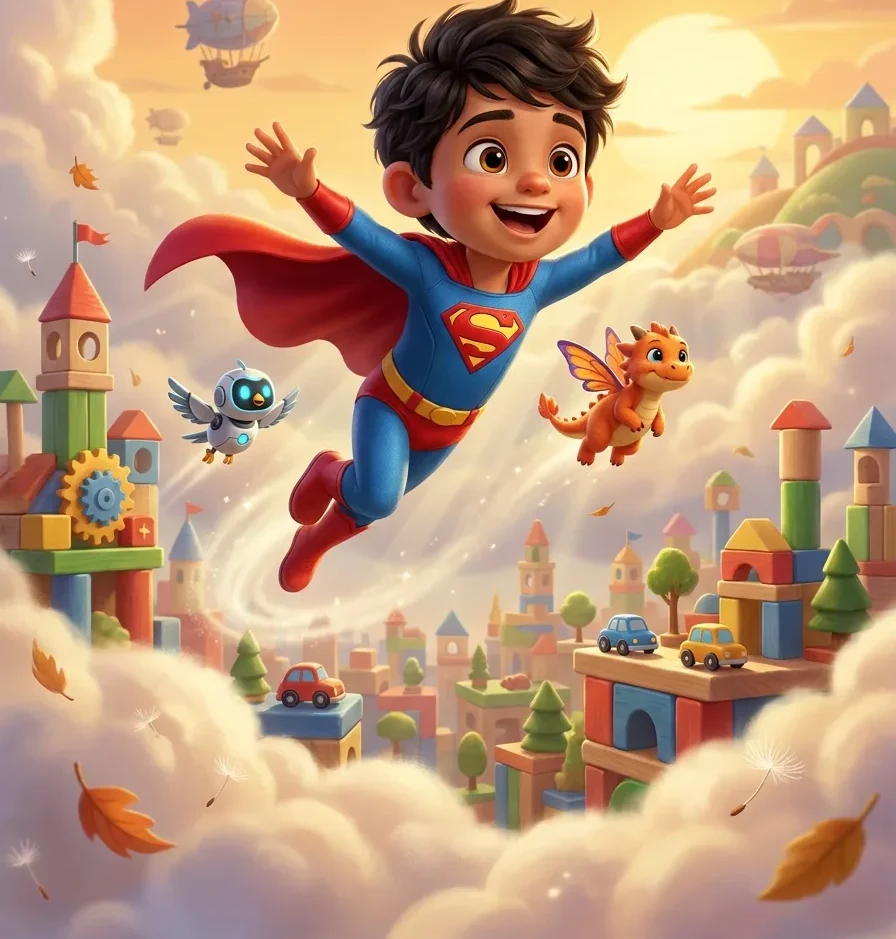
Your child discovers an extraordinary power - and an even bigger heart.
Ages 4-8
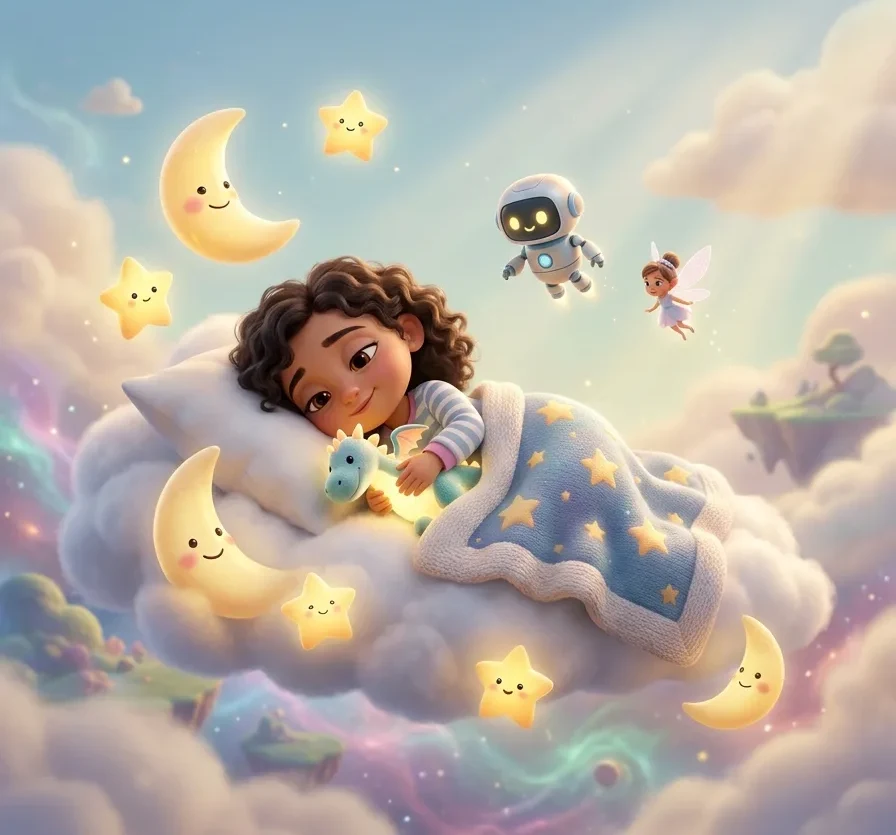
A slow, cozy journey to dreamland where your child says goodnight to the whole wide world.
Ages 0-6
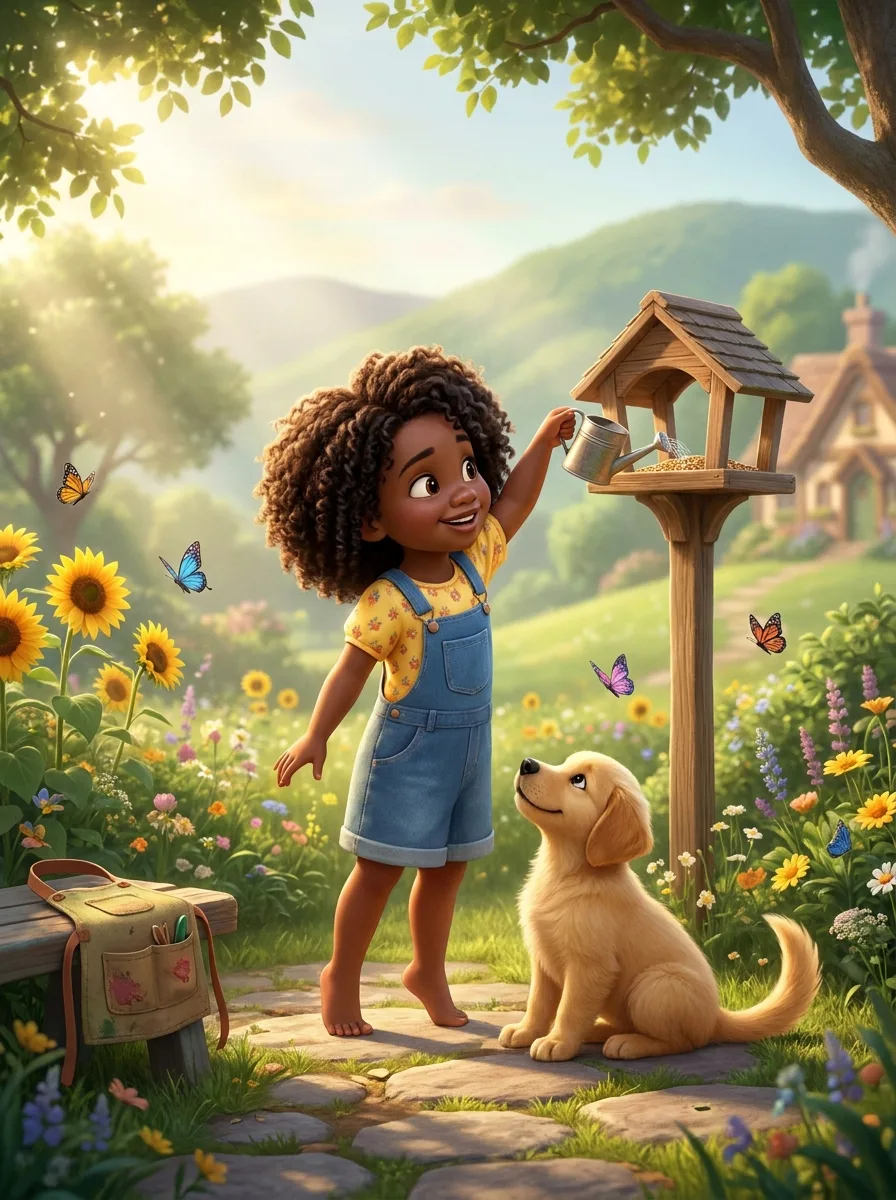
A warm-hearted story where your child discovers that the smallest acts of kindness can light up the whole world around them.
Ages 2-8
It depends on the site, which is the unsatisfying but true answer. Three things decide it: how long the file is kept, whether anything else can reach it while it is kept, and what it may be used for. The first and third are answerable from most policies. The middle one is answerable from almost none, so it is worth asking by email before you upload.
Not on its own. A file held for twenty minutes at an address anybody can reach is more exposed than one held for two months where nothing can reach it. Duration and reachability multiply, and only the first one tends to be published.
That the published privacy policy does not address the question. It is a statement about the document and nothing else - the company may have a perfectly clear internal answer. A parent reading what is published cannot find it.
Because there is nothing in the table to trust: every cell is either a quotation you can check against the link at the bottom of the page or the words "Not stated". We have not ranked anybody, scored anybody or told you who is best. If a cell does not match its source, tell us and we will correct it.
Very possibly - policies change without notice, which is why the date is on the page and every source is linked. If you find a cell that no longer matches its source, write to us and we will re-read the document and update the page.
It is used to draw the character who stars in the book, and nothing else. It is deleted automatically seven days after upload. It is held at an address that cannot be guessed, never shown on a page, never sold, never shared for advertising and never used to train a model. The long version, including how the illustration is drawn, is on our photo page.
Quotations were taken from each company’s own published privacy policy on 24 August 2026 and verified against the page text on that date. Policies change without notice: every source is linked above so the current wording is always one click away, and we will correct any cell that no longer matches its source - write to us. Company and product names are used only to identify whose document is quoted and imply no affiliation, endorsement or association. This page is a reading of public documents by a company that sells one of the products listed. It is not a security audit, not a ranking, and not legal advice.
Last updated:
If you would rather read our own answer at length before uploading anything, it is on one page with nothing softened.
Browse the collection