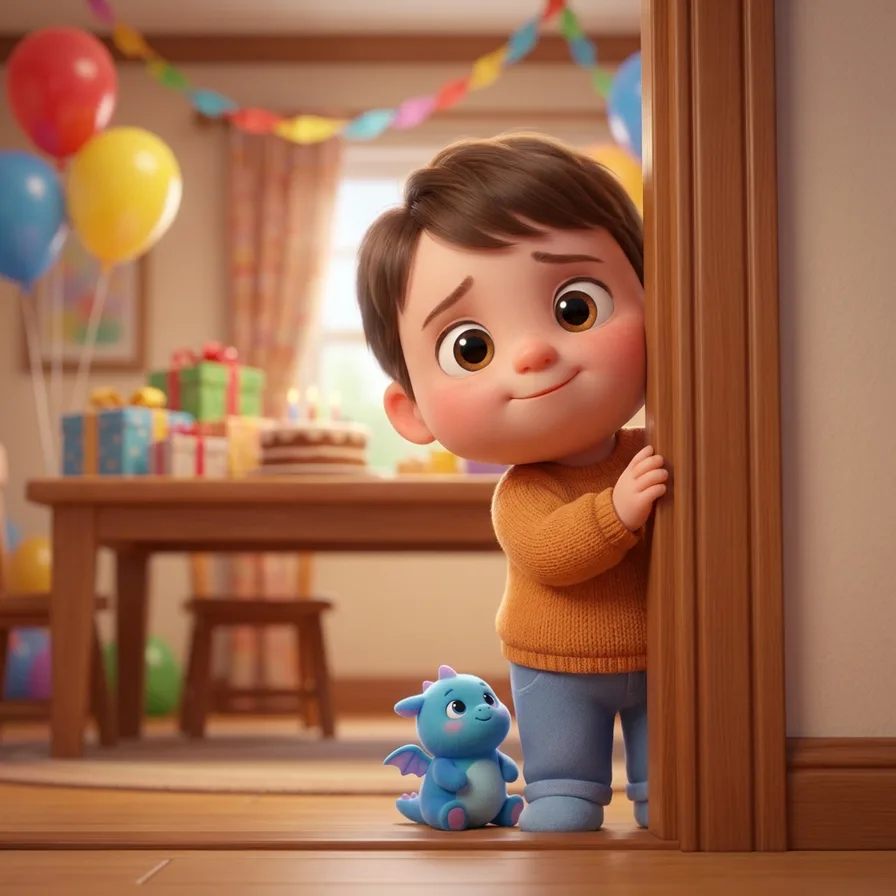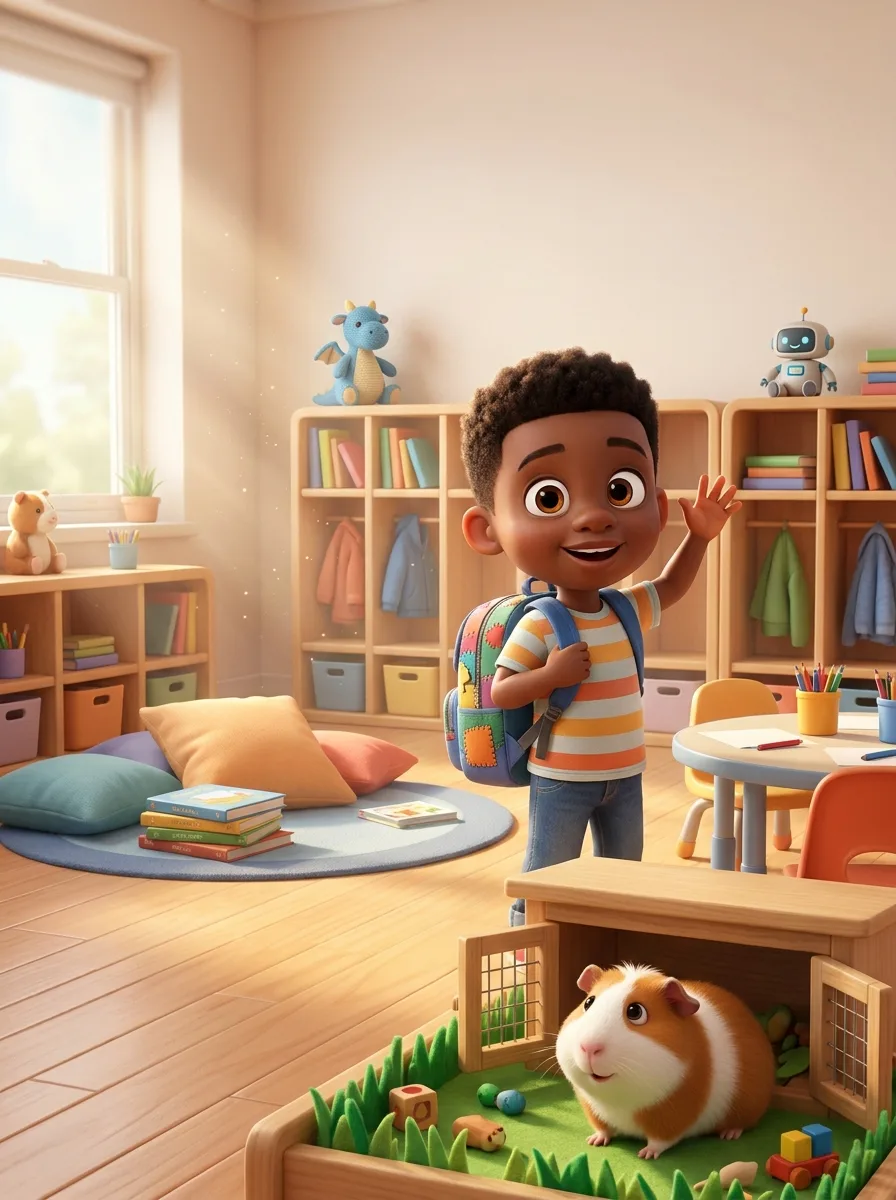
A reassuring story for the big first day, where your child learns that a brand-new place can quickly start to feel just like home..
Ages 2-8
From $14.90
Most starting-school presents are bought for the adult's feelings. Here is what the child notices, what every parent secretly needs, and the one rule about summer-born children.
A child starting school does not want to be remarkable. They want to be exactly like everyone else in the line, which is the opposite of what most starting-school presents are designed to do. That single fact rules out about half the gift guides for this occasion, and it is the thing to hold onto while choosing.
The week before school starts is emotional for the people who are not going, and the gift is often where that goes. That is not a criticism - it is worth naming, because a present bought to mark how you feel and a present bought for what the child needs on Tuesday are rarely the same object.
The child's actual priority is fitting in. A four-year-old walking into a room of thirty strangers wants the same bag as everyone else, not the special one. Anything that makes them conspicuous on the first morning is a burden dressed as a treat, however lovely it is.
Name labels. Every single item has to be named - jumper, cardigan, coat, water bottle, PE kit, book bag, shoes - and it is an evening of work that arrives in the same week as everything else. A set of iron-on or stick-on name labels is the least romantic present on this page and the one most likely to produce a genuinely grateful parent.
The same logic covers a spare water bottle and a spare pair of the school's specific PE shorts. Unromantic, immediately used, and the parent does not have to go out again.
The stories written for this particular week - the first morning, the new classroom, the friend not made yet - are collected on one page. Take a look
Anything they are responsible for looking after. A four-year-old cannot yet keep track of a treasured object across a school day, and a lost keepsake on day three is a bad memory attached to your name.
Anything sized for next year. It is a kind instinct and it means the thing is unusable in the term it was meant for.
And anything that requires them to explain it. A novelty lunchbox that invites thirty questions is a lot of social work for someone who is already using all of it to find the toilets.
Nobody reads anything on the first morning. It is shoes, a photograph nobody wanted, and out of the door. A present handed over in that fifteen minutes is opened later, if at all, and the moment you were buying it for does not happen.
The week before is when it lands - late enough to be about school, early enough that there is time to look at it properly. If it is a book, that gap is also when reading it does any good.
Most children in England start reception full-time in the September after their fourth birthday, and a great many parents believe that is compulsory. It is not. A child must be in full-time education by compulsory school age, which gov.uk defines as "31 December, 31 March or 31 August following their fifth birthday - whichever comes first".
The catch is the one people are not told: a child who starts in the September after they turn five normally goes into Year 1 rather than reception, skipping the reception year entirely. Parents can ask for a reception place instead, and per gov.uk the school "do not have to agree". If you are the grandparent of a summer-born four-year-old, this is more useful to the family than anything you could wrap.
A story about starting school works as a rehearsal, not as a memento. Read a week or two beforehand it gives a child a version of the day that has already gone well, and some words for the part that worries them. Given on the morning it is just an object in a bag.
We make personalised ones, so treat this as the interested party talking: a book with the child as the hero of their own first day is one option among several here, and the name labels further up this page are more useful to more families. If you do choose a book, the dedication is the part that survives - write it to the child, sign it, and date it.
A reassuring story for the big first day, where your child learns that a brand-new place can quickly start to feel just like home..
Ages 2-8
The party is loud and your child is not.
Ages 4-8
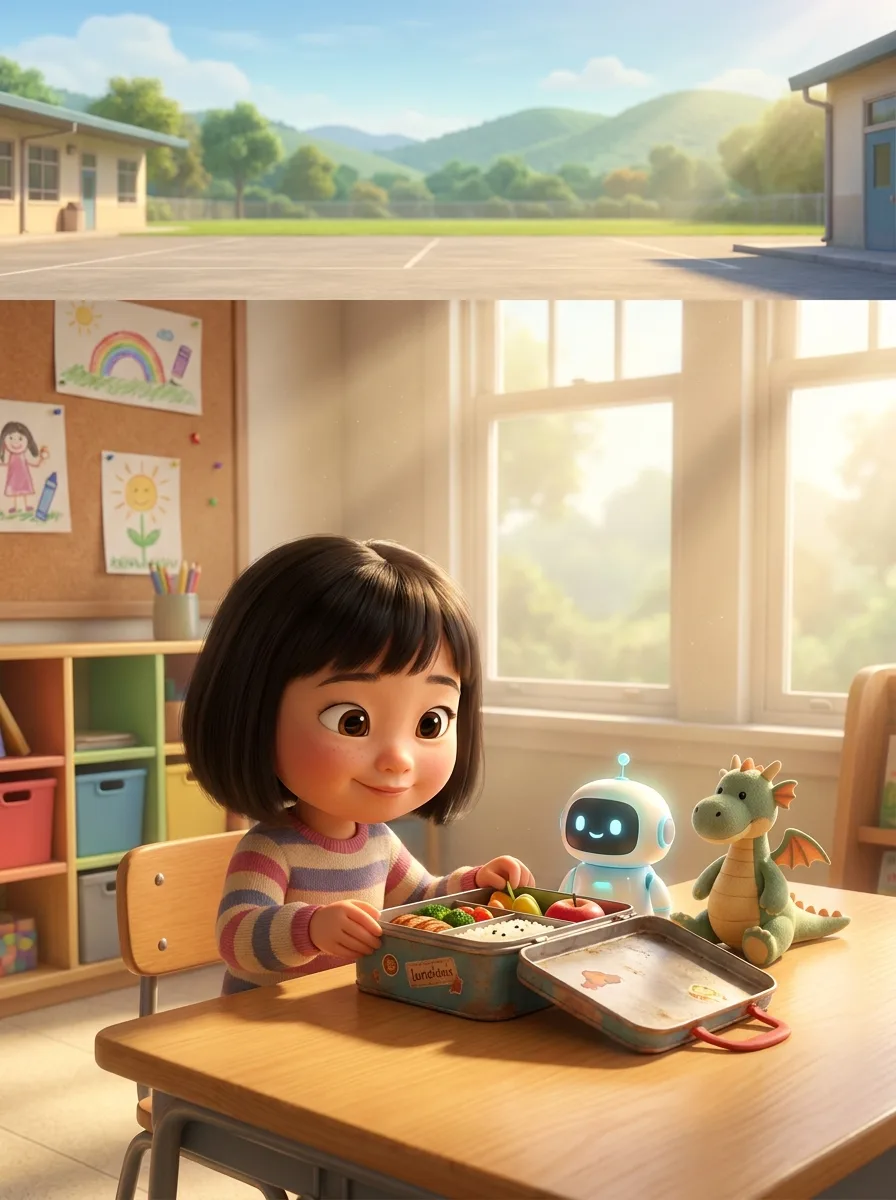
Everything about the first day is new except the lunchbox, which is from home.
Ages 2-8
The bus is enormous, and yellow, and it stops right at the end of the road.
Ages 2-8
Something they can use without having to look after it, in the school's own style rather than a special one. Name labels are the most useful present on most lists and almost nobody gives them. A book about starting school works too, provided it arrives a week or two early rather than on the morning.
No. The first morning is shoes and out of the door, and nothing given in it gets any attention. Give it the week before, which is late enough to be about school and early enough to be looked at properly.
Grandparents can give the thing the parents are too busy to think about - a set of name labels, a spare water bottle, or a book read together before the day. What lands least is anything that makes the child stand out on the first morning, because at four the whole ambition is to look like everybody else.
No. Most children in England do, but compulsory school age is the 31 December, 31 March or 31 August following their fifth birthday, whichever comes first. Be aware that a child starting after they turn five usually joins Year 1 rather than reception - you can ask the school for a reception place, and they do not have to agree.
Write it for them to find later rather than for the morning itself, because that morning nobody reads anything. Something plain and true - that they were braver than they thought - outlasts anything clever. Our dedication writer has copy-ready lines for this exact occasion.
Last checked on 12 August 2026. The school-starting-age rules described here are for ENGLAND and are quoted from gov.uk; Scotland, Wales and Northern Ireland differ, as does every US state. Admissions rules change - check the current position with gov.uk and your local authority before making a decision about deferring.
Last updated:
If a book is the part you want, read it together the week before rather than handing it over at the school gate.
Browse the collection