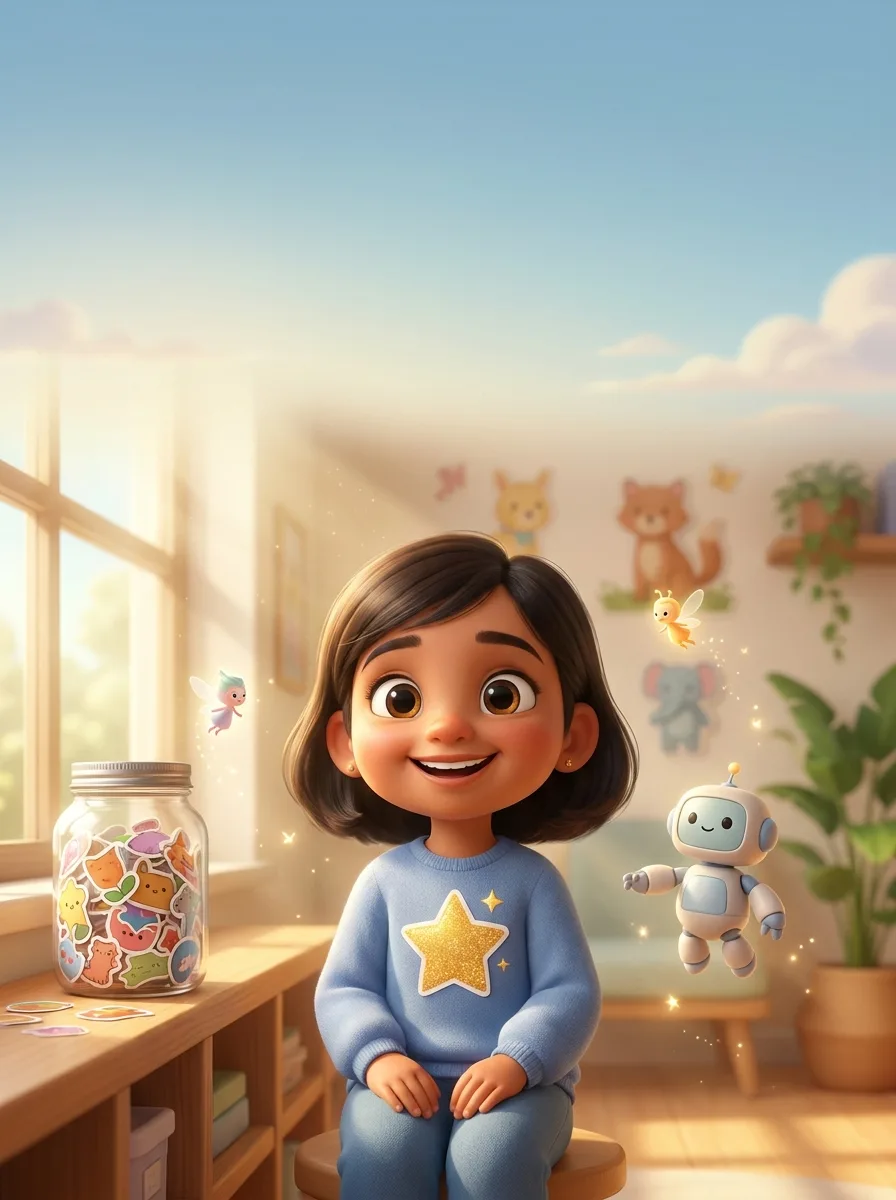
Your child gets a first pair of glasses - and suddenly the world sparkles with details nobody mentioned! A confidence-boosting story about seeing clearly and loving what makes you, you.
Ages 4-8
From $14.90
Why a haircut is harder than it looks for some children, what to do before the day and in the chair, from an NHS children's occupational therapy service, and a story to print.
A haircut asks a lot of a small child at once: a stranger touching their head, the smell of the products, the snip and buzz of the tools, cut hair on their skin, and all of it happening behind them where they cannot see. For a child with sensory difficulties, that is a pile of hard things in one chair. The good news is that most of them can be prepared for, and the list below comes from an NHS occupational therapy service that writes it for exactly these families.
The children's occupational therapy service at Aneurin Bevan University Health Board, part of NHS Wales, sets it out plainly: the scalp can be a really sensitive area to touch, and there are other sensory challenges too, such as the smell of hair products, the sound of scissors and clippers, and the feel of cut hair on the skin.
Their last point is the one most people miss. The haircut happens behind the child, so they cannot see what is going on. A lot of the preparation below is about fixing that: showing them the tools, telling them the steps, and giving them a way to know when it will end.
Read a social story about going to the hairdresser, so they know what will happen when you get there. If the salon is new, go for a visit first and ask whether your child can meet the person who will cut their hair.
Tell the hairdresser if your child is anxious or has sensory difficulties, and what helps. Ask whether they can show your child the tools before they start. Some salons run quieter autism-friendly sessions with staff trained to be more flexible; if a salon is too much, a mobile hairdresser can cut their hair at home, where they are more comfortable.
Dress them in something that comes off easily straight afterwards, like a zip-up top, and pack a clean one. The tiny bits of hair that get into clothes are, for some children, the worst part of the whole thing.
A free printable social story goes through the haircut in order, from the big chair to all done, with a space for a photo of your hairdresser and picture cards to cut out. Take a look
Bring your own cape if theirs is a problem: a familiar towel from home, held with a peg or a safety pin, does the job. Some children manage better sitting on a parent's lap, if the hairdresser does not mind. If tipping the head back to wash it is too much, ask whether they can lean forward over the basin or use a water spray instead, and take your own scent-free shampoo if smells are hard.
The service suggests some firm, deep pressure on the scalp, neck and shoulders before the cut starts, which can turn down how sensitive the skin feels, and a weighted lap pad if your child already uses one. If the noise of scissors or clippers is the problem, there are quieter clippers, or silicone earplugs, or headphones with their favourite music.
Use pictures in the chair so they know what is coming and that there is an end: sit in the chair, cape on, comb, spray, clippers or scissors, hair dryer, cape off, all done. And bring a favourite small toy to hold.
If your child finds a lot of everyday sensations hard, our guide to sensory-friendly books looks at which picture books work for them and why. Take a look
Say what will happen, in order, and stop. "First the cape, then the spray, then snip snip, then the mirror, then all done." Do not promise that it will not feel like anything, because the spray will be cold and the hair will tickle, and a child who has been told otherwise has one more reason not to trust the next haircut.
Afterwards, name one thing they did rather than a verdict on them. "You held your head still while she did the back" is something they can take to the next appointment. "Good boy" is not.
Your child gets a first pair of glasses - and suddenly the world sparkles with details nobody mentioned! A confidence-boosting story about seeing clearly and loving what makes you, you.
Ages 4-8
There is a jar of stickers at the end, and you only get one if you sit still.
Ages 0-8
Sometimes your child's feelings feel too big to hold, and that is okay.
Ages 2-8
Read a social story about the hairdresser beforehand, visit the salon first if it is new, tell the hairdresser what helps, and ask them to show your child the tools. In the chair, a picture sequence of the steps shows them there is an end. That is the advice of an NHS children's occupational therapy service.
For many children it is several sensory challenges at once: a sensitive scalp being touched, the smell of products, the sound of scissors and clippers, cut hair on the skin, and the fact that it all happens behind them where they cannot see it.
Quieter clippers exist, and silicone earplugs or headphones playing their favourite music block out a lot of the sound. Asking the hairdresser to use scissors only is also worth trying.
Often, yes, if the hairdresser does not mind. The NHS Wales occupational therapy leaflet suggests it, along with bringing a familiar towel from home instead of the salon's cape.
Yes: ours is free to print, with no sign-up, in US Letter and A4. It goes through the haircut in order, has a space for a photo of your own hairdresser, and gives the reason for every line.
This guide was last checked on 29 October 2026. The strategies come from the "Sensory Strategies for Hair Cuts" leaflet by the Occupational Therapy Service for Children and Young People at Aneurin Bevan University Health Board (NHS Wales), read on its own site on 29 October 2026. It is general advice, not a therapy plan. If haircuts are a real fear, an occupational therapist who knows your child can do far more than a page can.
Last updated:
Show them the tools, tell them the steps, and give them a way to see the end.
Browse the collection