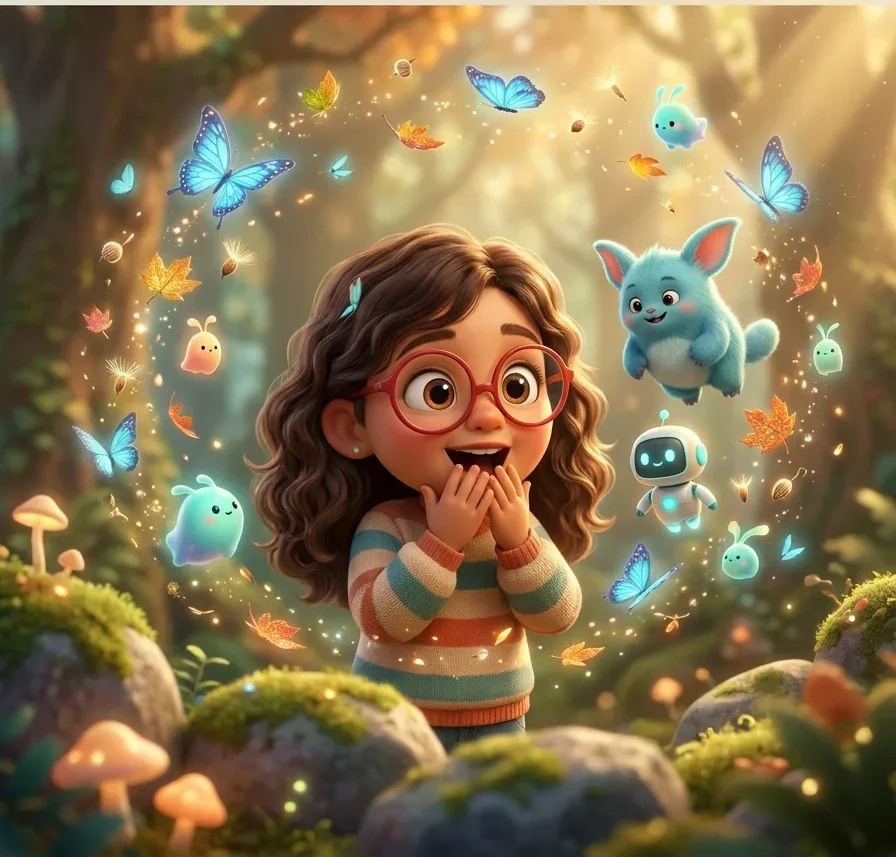

Your child gets a first pair of glasses - and suddenly the world sparkles with details nobody mentioned! A confidence-boosting story about seeing clearly and loving what makes you, you.
Ages 4-8
From $14.90
What to do before the appointment, how to let your child choose, the first fortnight at school, and a short list of picture books about glasses.
For most children the glasses themselves are not the hard part. The hard part is the moment they work out that other children will notice. So this page is about the days before the appointment and the first two weeks after, which is when a little preparation helps most, and then a list of picture books that make a first pair of glasses feel ordinary.
Tell your child what will happen in words they already know. "A kind person will show you some pictures and letters and ask what you can see. Some of it will be blurry, and that is the point." Children usually worry about the unknown more than the glasses.
If you can, play it first. Let them be the eye doctor for a teddy, or read the letters off a poster across the room. A game of "what can you see from here?" turns a test into something they are in charge of.
This is general parenting advice, not medical advice. How often your child needs an eye test, and what the prescription means, is a question for their eye doctor.
The single most useful thing you can do is hand over the choice. A child who picked the frames is wearing something that is theirs. A child who was given them is wearing something that was done to them.
Offer a few that fit well and that you are happy with, rather than the whole wall, and let the final pick be theirs. Let them try each pair in the mirror for as long as they like. The colour they choose may not be the one you would have chosen. That is fine, and it is the reason they will wear them.
Ask the optician to check that the frames sit comfortably and stay on when your child bends over or runs. A pair that slides down the nose will end up in a pocket.
Expect a few awkward days. Glasses can feel strange on the nose and behind the ears, and some children take them off the moment you look away. Praise the minutes they do wear them, and ask the eye doctor how long they should be worn each day.
Tell the teacher before the first day back, so the change is not a surprise in front of the class. Give your child one sentence to say if somebody asks: "These are my new glasses. I can see the board now." A line they have practised is easier to say than one they have to invent.
Do not make a ceremony of it, and do not apologise for them. If you treat the glasses as ordinary, most children decide quickly that they are.
Reading about a character who gets glasses lets your child practise the feelings at a safe distance, before or after the appointment. These are published picture books that appear on the lists linked at the bottom of this page. Check them at your library before you buy.
Douglas, You Need Glasses! is by Ged Adamson. Arlo Needs Glasses is by Barney Saltzberg and comes with flaps and a sight chart your child can read. Glamorous Glasses is by Barbara Johansen Newman. I Can See Just Fine is by Eric Barclay. Luna and the Big Blur is by Shirley Day. I Really Absolutely Must Have Glasses is a Charlie and Lola story by Lauren Child.
Every book above is about someone else. For some children, seeing themselves in the story is what makes it land: the child on every page has their face, their name and their own new frames.
New Glasses, New World is our story for the fortnight after a prescription. The first chapter is what blurry was actually like, which most children cannot describe until somebody does it for them. The last is about liking the face in the mirror. It suits ages four to eight. You see the cover and first chapter free, with no card and no account, before you decide anything.
See the cover and the first chapter of New Glasses, New World with your child on it. It is free to preview, no card needed. Take a look
No book makes a child love their glasses overnight, and none replaces the eye doctor. What a story can do is give your child words for a feeling and a character who went through it first.
Your child gets a first pair of glasses - and suddenly the world sparkles with details nobody mentioned! A confidence-boosting story about seeing clearly and loving what makes you, you.
Ages 4-8
Sometimes your child's feelings feel too big to hold, and that is okay.
Ages 2-8
The party is loud and your child is not.
Ages 4-8
Let them choose the frames, praise the minutes they do wear them, and ask the eye doctor how long they should be worn each day. Treating the glasses as ordinary helps more than a fuss does.
Tell them before the first day back, so the change is not a surprise in front of the class. Give your child one practised sentence to say if somebody asks.
No. It is general parenting advice. How often your child needs an eye test and what the prescription means are questions for their eye doctor.
Four to eight. The reading level follows the age you enter, and you see the cover and first chapter free before you pay.
This guide was last checked on 24 November 2026. The book titles and authors are taken from the two published lists linked below, read on their own sites on that date. The advice is general parenting advice, not medical advice: ask your child's eye doctor about their prescription and how long to wear them each day.
Last updated:
Have a photo to hand? See the first chapter free, with your child in the glasses.
Browse the collection